

Most kitchen operators think about extraction in terms of what leaves the building. The grease, the steam, the cooking smells that neighbours might complain about. That is a reasonable concern, and one with a regulatory dimension that cannot be ignored. But there is an equally important question that gets less attention: what is the air actually like inside the kitchen, for the people working in it, hour after hour, shift after shift?
A well-designed extraction and filtration system does two things simultaneously. It removes contaminated air from the cooking environment and replaces it with clean, fresh air. Both halves of that process matter. A system that extracts efficiently but does not introduce adequate make-up air creates negative pressure, which makes doors difficult to open, pulls unconditioned air through gaps in the building envelope, and puts the whole ventilation system under strain. A system that introduces fresh air without proper filtration of the exhaust stream leaves cooking emissions, heat, and moisture cycling back into the space. Getting both right is what a properly specified system achieves.
What a commercial kitchen generates
A professional kitchen in full service is producing a considerable volume of airborne material. Grease particles aerosolise during cooking and travel with the heat plume rising from the cooking surface. Combustion gases, including carbon monoxide and nitrogen dioxide, are produced by gas-fired equipment. Steam and moisture from boiling, braising, and washing raise humidity levels that, without adequate extraction, make the working environment physically uncomfortable and accelerate the deterioration of surfaces and equipment. Odour compounds travel with all of the above.
Without a filtration system capable of dealing with all of these at different stages, the air that circulates through the kitchen carries a proportion of what the cooking produces. Staff working a full shift in that environment are breathing it throughout. The cumulative effect on comfort, concentration, and long-term health is well documented in occupational health research, and it is one of the reasons that kitchen ventilation standards exist.
Why filtration stages matter
A single filter cannot address all of the above. Different contaminants require different filtration mechanisms, which is why a properly specified system works in stages, each targeting a distinct element of the airstream.
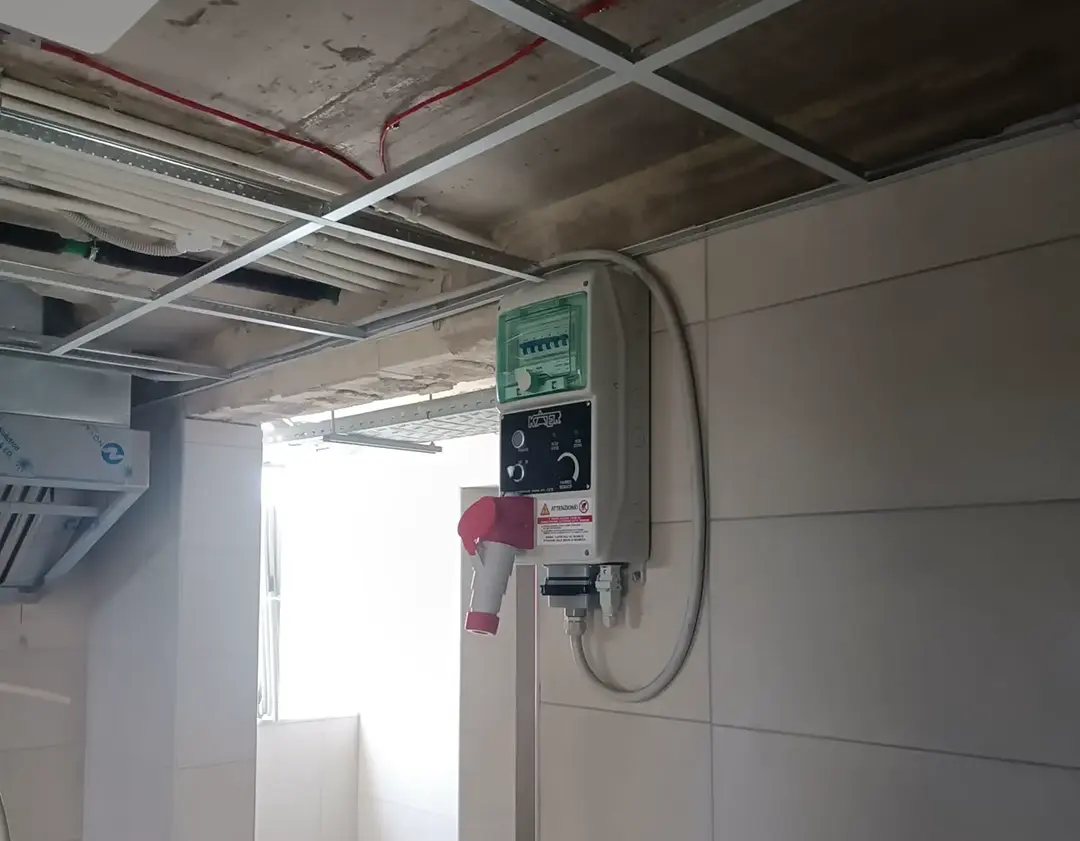
Mesh or baffle filters at the canopy capture larger grease particles at source, protecting the ductwork downstream and significantly reducing fire risk. Without this first stage, grease accumulates in the duct and creates a hazard that no amount of downstream filtration can compensate for. Synthetic and bag filter stages further downstream remove the finer particulates that pass through the first stage. Electrostatic filtration addresses the microscopic particles that mechanical filters alone cannot reliably capture. Carbon filtration deals with odour compounds, ensuring that what is eventually discharged is treated to a standard appropriate for the building and its surroundings.
A system incorporating all of these stages in sequence does not just satisfy the regulator. It produces a measurably different working environment. The air the kitchen team breathes is cleaner. The heat load in the kitchen is better managed. The surfaces stay cleaner for longer. The equipment runs cooler. These are not marginal gains in a kitchen that operates six or seven days a week.
The best extraction and filtration systems work quietly in the background. You notice them most clearly when you walk into a kitchen where the system is not up to the job: the heat, the residual smell, the slight heaviness in the air. A properly specified system removes all of that.
Make-up air and why it is as important as extraction
One aspect of kitchen ventilation that is frequently underspecified is the supply side. Extraction removes air from the kitchen; make-up air replaces it. If the volume of air being extracted is not matched by an adequate supply of fresh air, the kitchen runs under negative pressure. This manifests as doors that are hard to open, draughts pulled through any available gap, and an extraction system that has to work harder than it was designed to, reducing its effectiveness and shortening its service life.
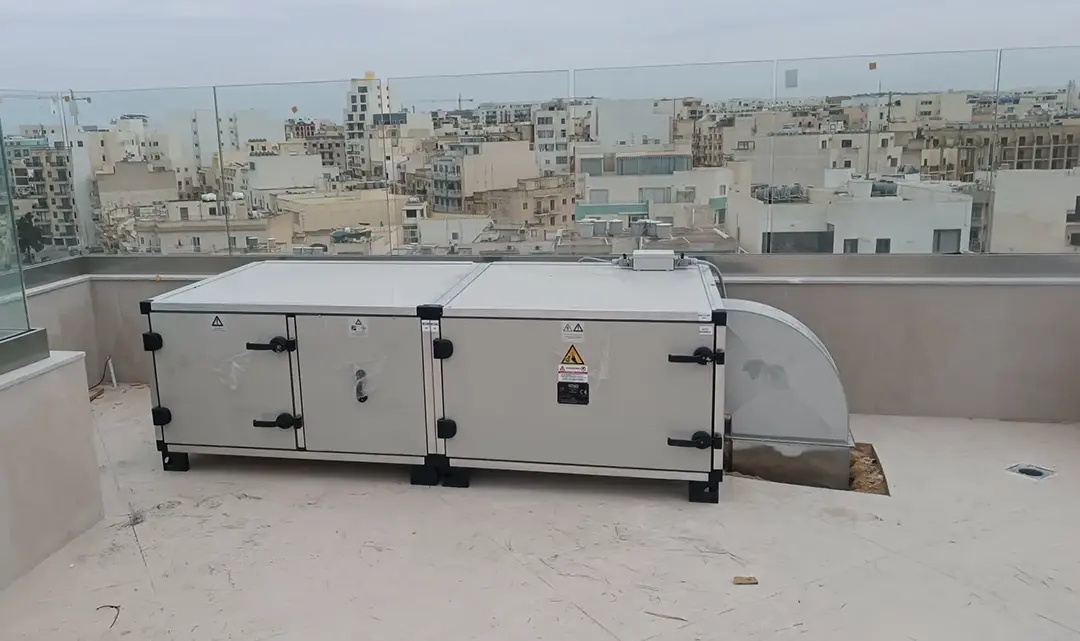
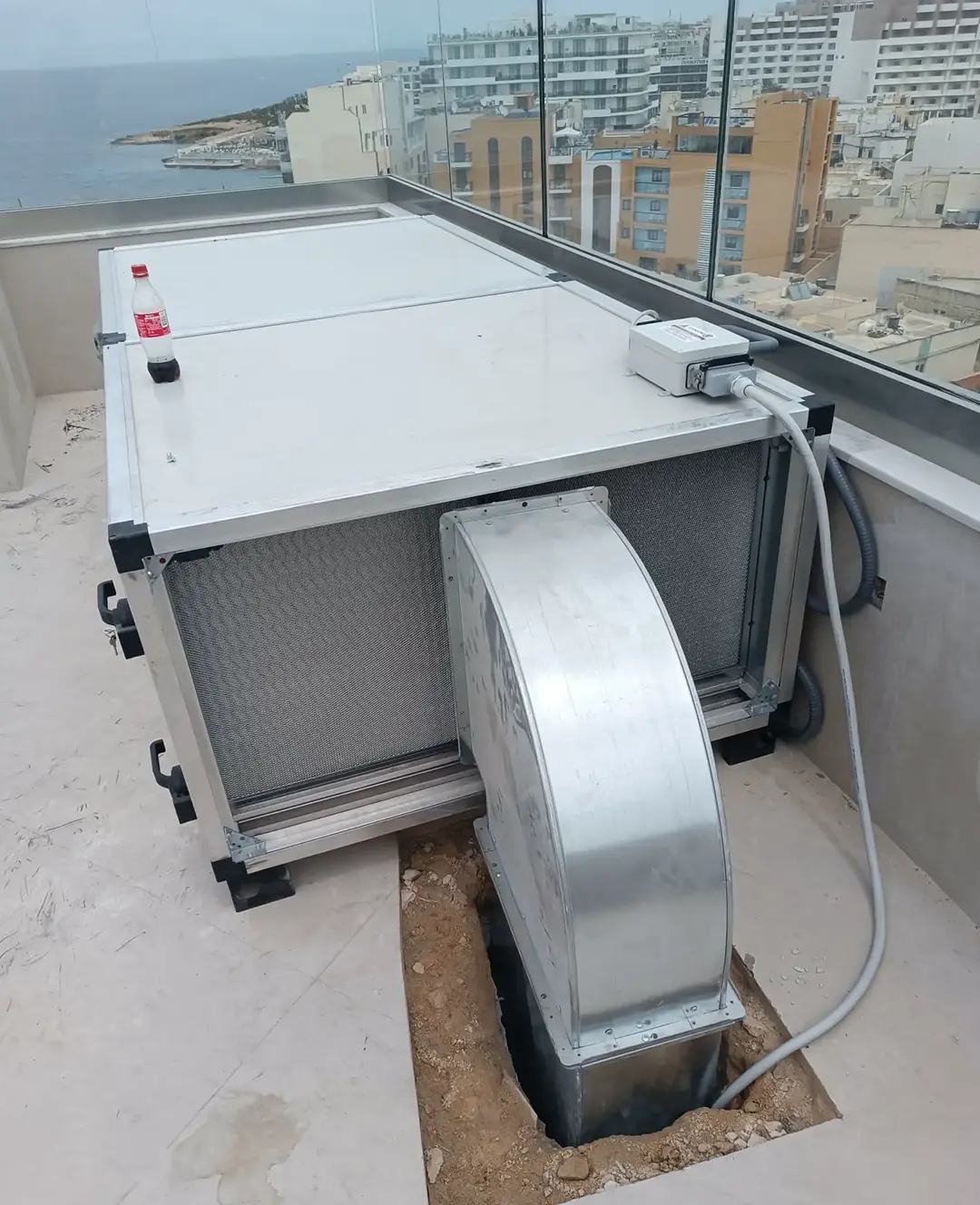
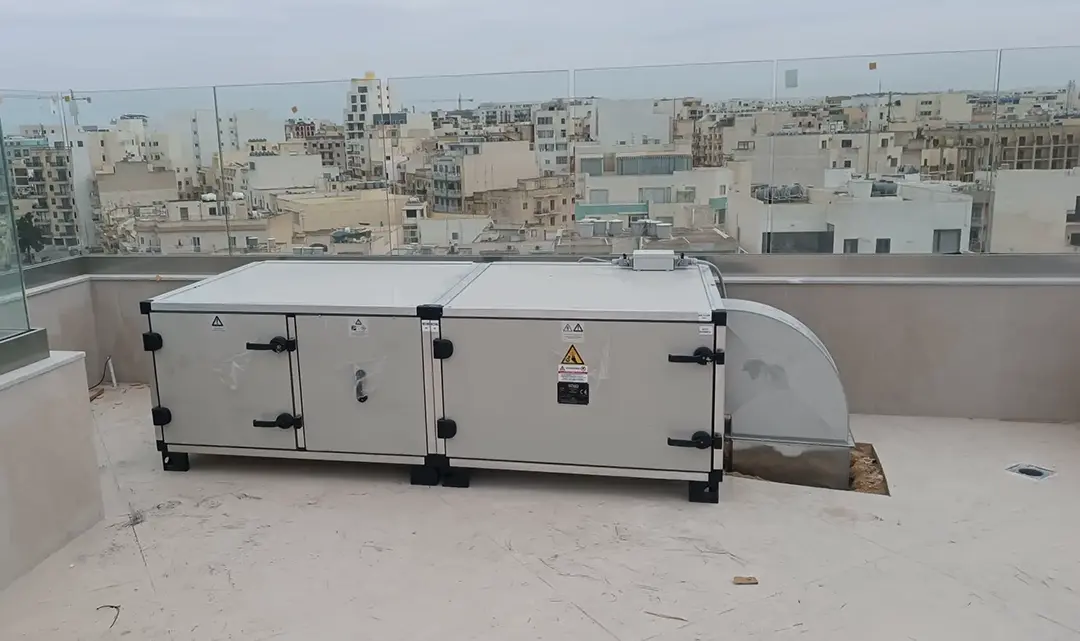
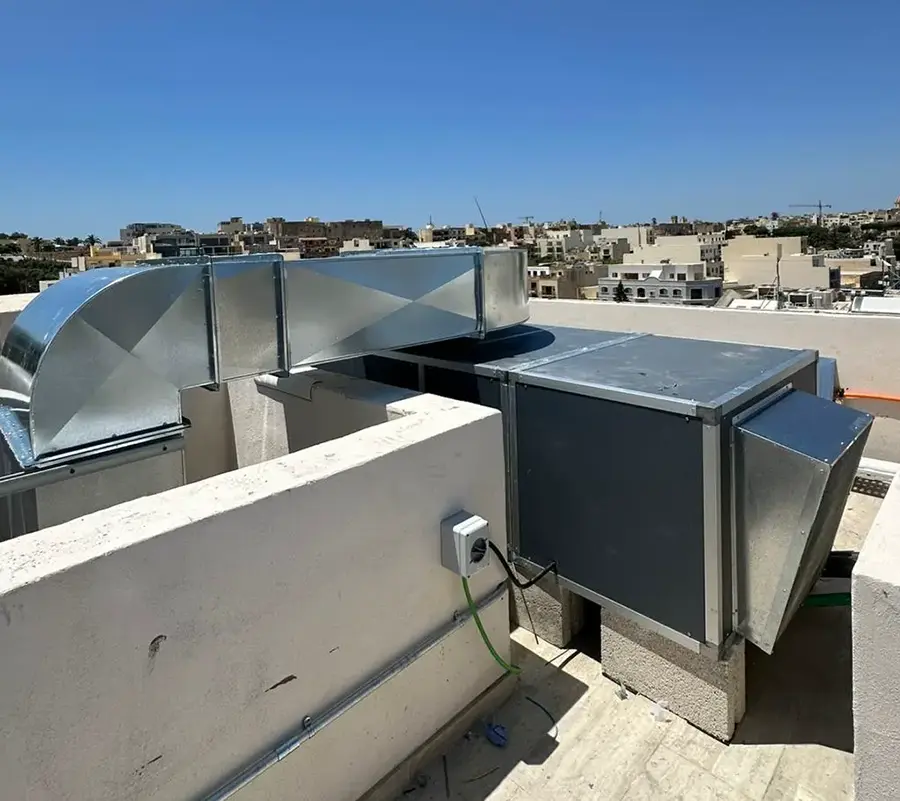
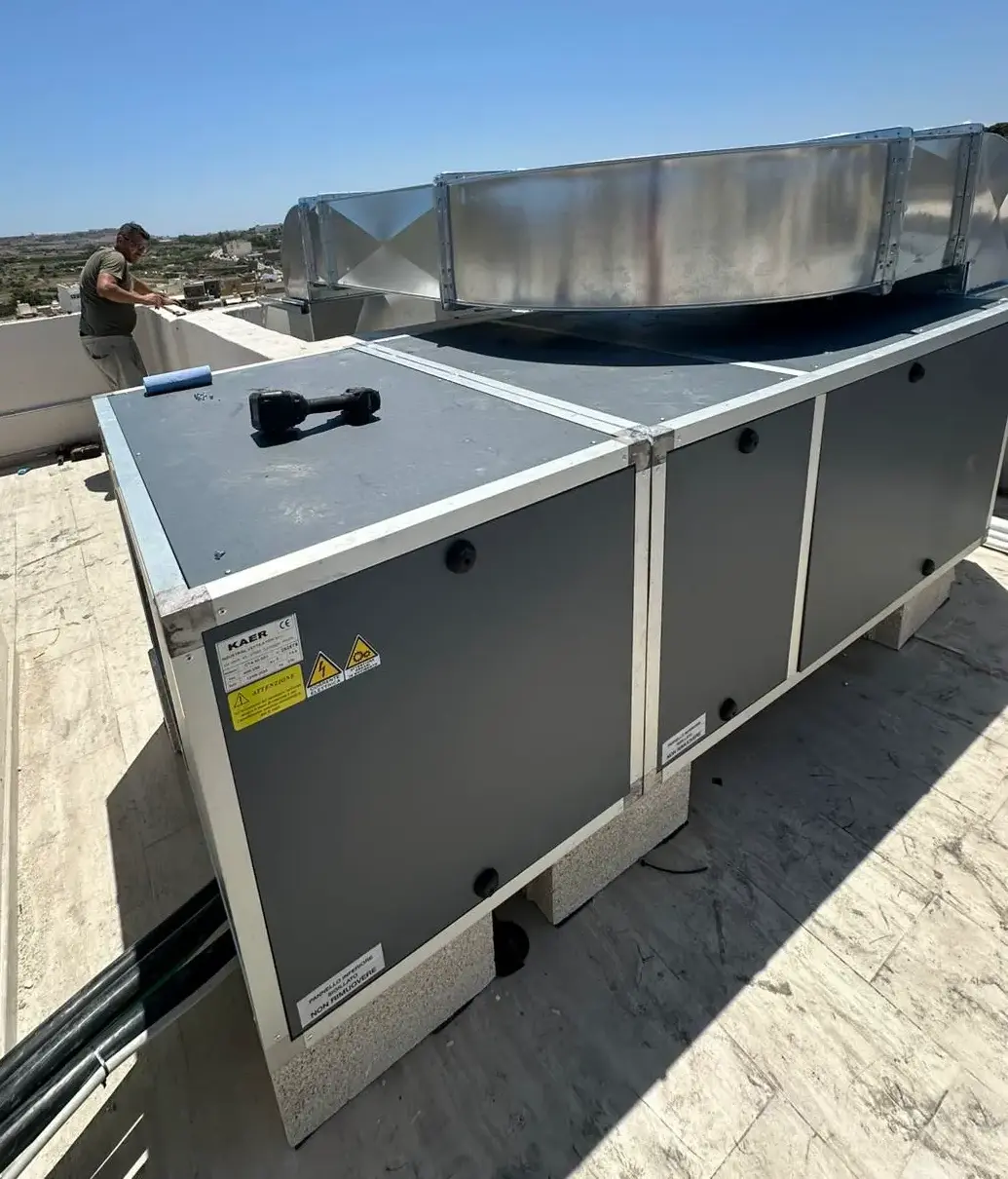
A supply air handling unit, positioned typically at roof level and ducted to introduce fresh air into the cooking zone, resolves this. The unit can be configured to condition the incoming air, tempering it in winter and introducing it at a temperature and flow rate that complements the extraction rather than working against it. In Malta's climate, where summer kitchen temperatures are already high, a well-designed supply system makes a material difference to the working conditions of the team inside.
A recent hotel kitchen in Bugibba
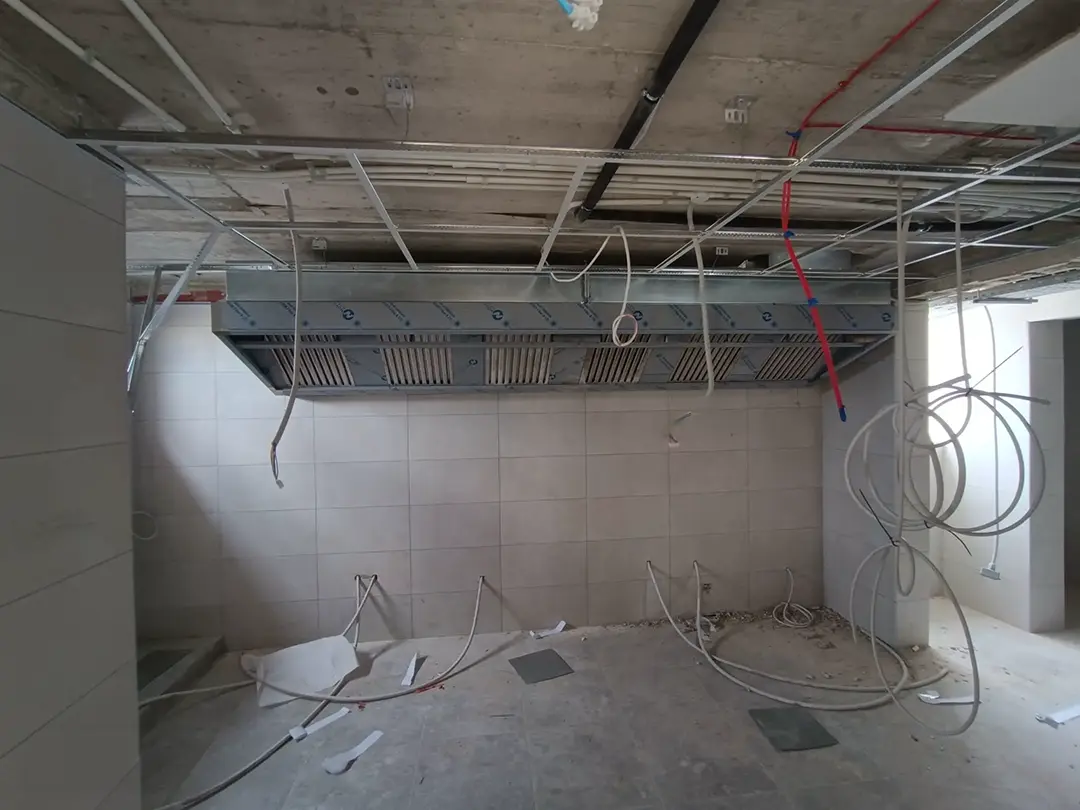
Work currently under way on a new hotel kitchen in Bugibba illustrates what a complete system looks like in practice. The installation includes a full stainless steel extraction canopy spanning the cooking line, with a multi-stage filtration system incorporating seven distinct treatment stages from grease capture through to final odour removal. A supply air handling unit is installed at roof level, ducted to deliver fresh, clean air back into the kitchen at the appropriate volume to balance the extraction. The air that circulates through that kitchen will be treated at every stage, both as it leaves and as it enters.
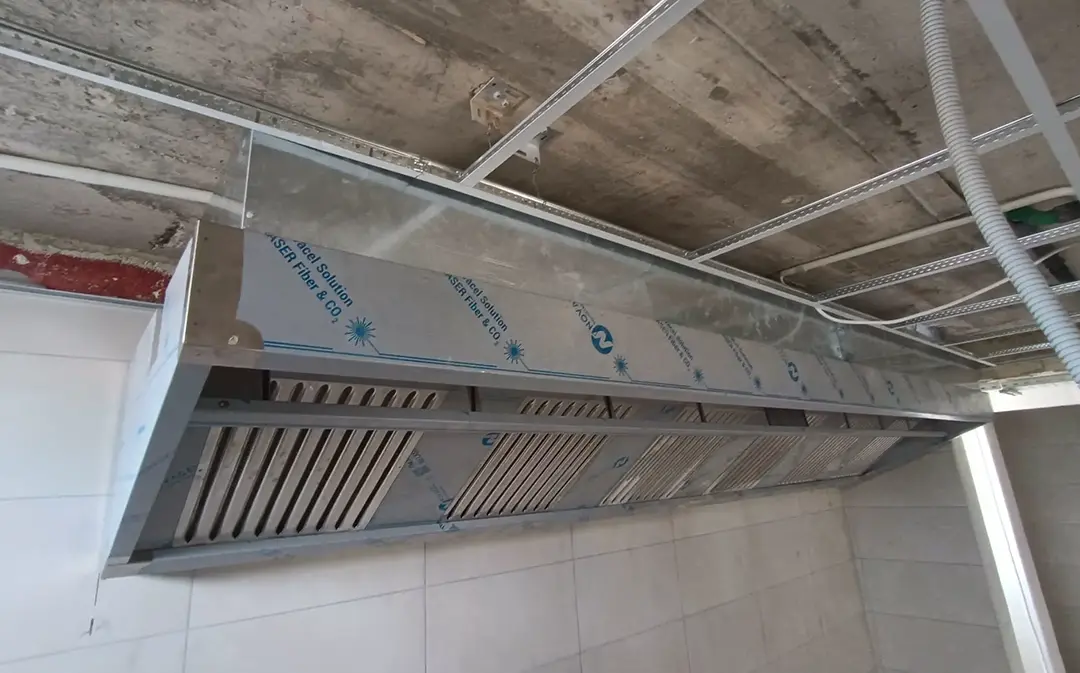
The result, when the kitchen is in service, is an environment where the team can work through a full shift without the heat accumulation, residual odour, and air quality degradation that an underspecified system produces. That matters for staff welfare. It also matters for the operator, because a kitchen team that is comfortable and working in good conditions performs better and stays longer.
What to look for when specifying a system
If you are planning a new kitchen or replacing an ageing extraction system, the specification of your ventilation deserves the same attention as your cooking equipment. A canopy sized to the cooking load, a filtration train with adequate stages for the volume and type of cooking, a supply system that properly matches the extraction rate, and ductwork routed and fire-rated to the required standard: these are the components of a system that will perform reliably and meet regulatory requirements throughout its service life.
The systems available today are considerably more effective than those installed even a decade ago. Electrostatic and carbon filtration technology has advanced, the efficiency of supply air handling units has improved, and the integration of speed controls and monitoring into the overall system means that a modern installation can respond to varying demand rather than running at a fixed rate regardless of what is happening on the cooking line. For an operator investing in a new kitchen, specifying a current system rather than a legacy one is worth the conversation.
If you would like to discuss extraction, filtration, or supply air for your kitchen, we would be glad to talk through what your operation requires. Get in touch with the Spiteri Catering team and let us understand what you need. We handle everything from initial consultation and design through to supply, professional installation, and ongoing technical support.
Related reading: Why Proper Kitchen Extraction Design Matters | Kitchen Extraction in Protected Buildings: The Casa Giuseppe Installation, Gozo | How to Plan a Commercial Kitchen in Malta