

Commercial kitchen equipment is built to work hard. Most of it does, day after day, without much complaint. That reliability can become its own problem: the longer a piece of equipment runs without issue, the easier it is to assume it will keep doing so without any particular attention.
It will not. Even the most robust professional appliances need regular maintenance to perform consistently, hold their calibration, and avoid the kind of failure that costs you a service rather than an hour of downtime. The good news is that most of what keeps a commercial kitchen running well is straightforward, provided it is done consistently.
Daily habits: building maintenance into closing procedures
The most effective maintenance is the kind that happens every day without anyone having to think about it. The place to embed it is in your closing routine, where it becomes part of how the kitchen is shut down rather than an additional task on top of everything else.
External surfaces on ovens, grills, and fryers should be wiped down with a non-abrasive cleaner at the end of every service. Grease build-up affects both performance and safety, and it is far easier to remove when it is fresh. Filters on fryers and dishwashers should be emptied and cleaned; oil and food particles reduce efficiency and put unnecessary strain on the machinery. Door seals on fridges and freezers deserve a quick check: a cracked or loose seal causes energy loss and inconsistent temperatures, and it is the kind of thing that is easy to miss until it has been causing a problem for weeks. Combi oven chambers should be cleaned and descaled regularly, since limescale build-up is one of the most common causes of reduced steam function and service calls.
A small maintenance log kept near each major appliance is worth introducing. A simple checklist, even a dry-wipe board, creates accountability and means small issues are caught early rather than left to develop into larger ones.
Weekly deep cleans: going beyond surface appearance
Daily wipes keep a kitchen looking clean. Weekly deep cleans are what actually preserve the performance of the equipment inside it.
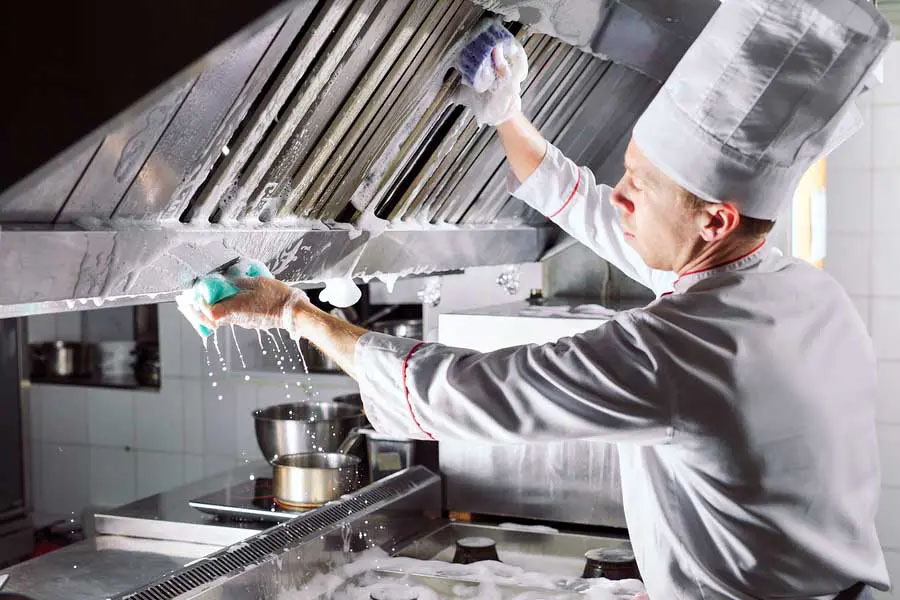
Each week, appliances should be pulled out and cleaned underneath and behind them to prevent pest harbouring and airflow blockages. Mixer attachments, food processor bowls, and slicer components benefit from full disassembly and a proper soak. Ventilation hoods and their filters should be degreased thoroughly, particularly in kitchens running high-fat service. Temperature settings on fridges, freezers, and sous vide units should be checked against a calibrated thermometer rather than taken on trust from the display.
Rotating weekly cleaning responsibilities by station or day keeps the load distributed and means it becomes part of the kitchen's rhythm rather than something that falls to whoever is last out of the door.
Monthly checks: treating equipment the way you treat ingredients
Once a month, a more thorough walk-through of your appliances is worth scheduling. This is less about cleaning and more about inspection: looking for the early signs of wear before they become operational problems.
Unusual noises, slow starts, or inconsistent outputs are worth noting even if the equipment is still functioning. Fraying cords or exposed wiring should be flagged immediately. Misaligned doors, loose handles, and uneven surfaces often indicate wear that will worsen under continued use. Blades, belts, and fans should be checked for signs of deterioration. Document anything you find, even if it seems minor at the time. Replacing a worn gasket or recalibrating an oven door is a small job; losing an evening's service to an avoidable failure is not.
This is also the point at which a formal technical support arrangement earns its value. Having a service team who knows your equipment and can carry out or respond to monthly checks takes the responsibility off the kitchen and puts it in the hands of people with the right tools and product knowledge to deal with it properly.
Seasonal servicing: getting ahead of the busy periods
Twice a year, before your peak trading periods rather than during them, a full service check on high-use equipment is worth scheduling. Ovens, dishwashers, refrigeration units, and water boilers are the priority. Peak seasons in Malta are predictable, and equipment failure during Christmas service or a full summer of covers is when it costs most. Preventative servicing extends the working life of expensive assets and often satisfies warranty conditions that require evidence of regular professional maintenance. A technician who knows the equipment can identify developing issues that a kitchen team, however diligent, is unlikely to spot during daily operation.
The practical advice is to book this work during quieter trading periods, early spring or the post-summer lull, when the kitchen can accommodate an inspection without disrupting a full service operation.
Training your team: maintenance is not just a management responsibility
A kitchen team that understands how to care for its equipment is a meaningful asset. Basic equipment handling and maintenance should be part of how new staff are brought into the kitchen, covering how to clean each piece of equipment correctly, what warning signs to report and to whom, how to store, shut down, and switch off appliances safely, and what not to do under any circumstances.
When we deliver new equipment to a kitchen, our team is available to walk staff through correct operation and basic care as part of the handover. Good habits embedded at the start are considerably easier to maintain than habits introduced after something has already gone wrong.
Having a contingency plan
No kitchen avoids technical problems entirely. The difference between a manageable situation and a disrupted service is usually whether there was a plan in place before the problem occurred.
Small appliances that are essential to service, such as immersion blenders or contact grills, are worth having a backup for if their failure would directly affect what goes out. Key contacts, including service engineers and suppliers who can turn around urgent replacements, should be saved and accessible to whoever runs the kitchen. Warranty terms and service history should be logged somewhere they can actually be found when needed.
Working with a supplier who provides ongoing support rather than simply fulfilling an order is a practical advantage here. Knowing that the company who supplied your equipment is also the company that can service it, with genuine product knowledge and local presence, removes a layer of uncertainty when something needs attention.
If you would like to discuss your kitchen's maintenance schedule or equipment servicing, we would be glad to hear from you. Get in touch with the Spiteri Catering team and let us understand what you need. We handle everything from initial consultation and design through to supply, professional installation, and ongoing technical support.
Related reading: Oven Maintenance: Protecting Your Kitchen's Heartbeat | Essential Maintenance for Your Glasswasher and Dishwasher | Getting Your Commercial Kitchen Ready for Summer