

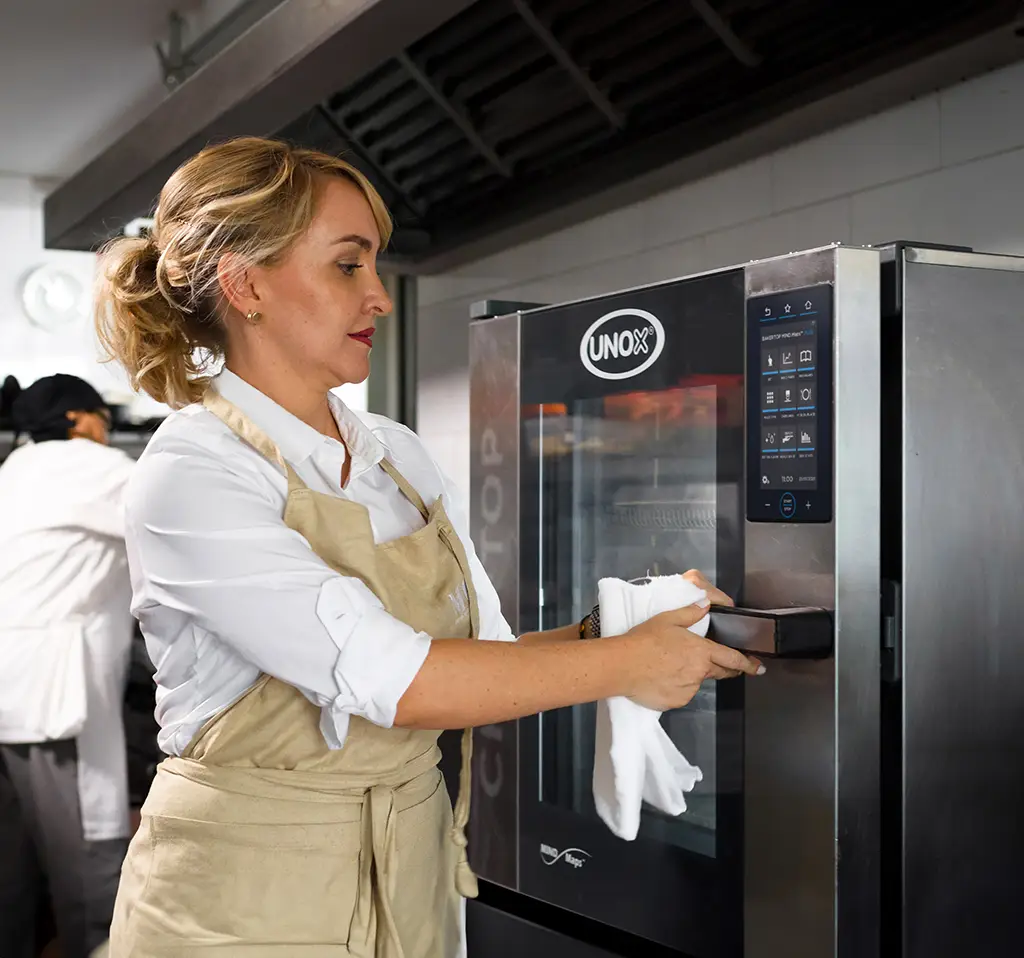
TL;DR: A professional bakery oven needs to hold temperature evenly across every tray, manage humidity with precision throughout the bake cycle, and keep pace with the demands of daily production. The Unox BAKERTOP MIND.Maps does all of that, and it does it in a way that actually makes the baker's job easier rather than more complicated.
Most ovens in commercial kitchens are good at one thing. The workhorse convection oven bakes reliably and simply. The general-purpose combi handles a wide range of cooking tasks with a single piece of equipment. Both have their place. But neither is designed specifically for the rhythms and demands of professional bakery production, and when you are working with dough, pastry, and confectionery day in and day out, the gap between adequate and purpose-built becomes very noticeable very quickly.
What follows is a straightforward guide to what a serious bakery oven actually needs to do, where the Unox BAKERTOP MIND.Maps range sits in that picture and what good installation looks like for a Maltese bakery or pastry operation.
The things a bakery oven actually has to get right
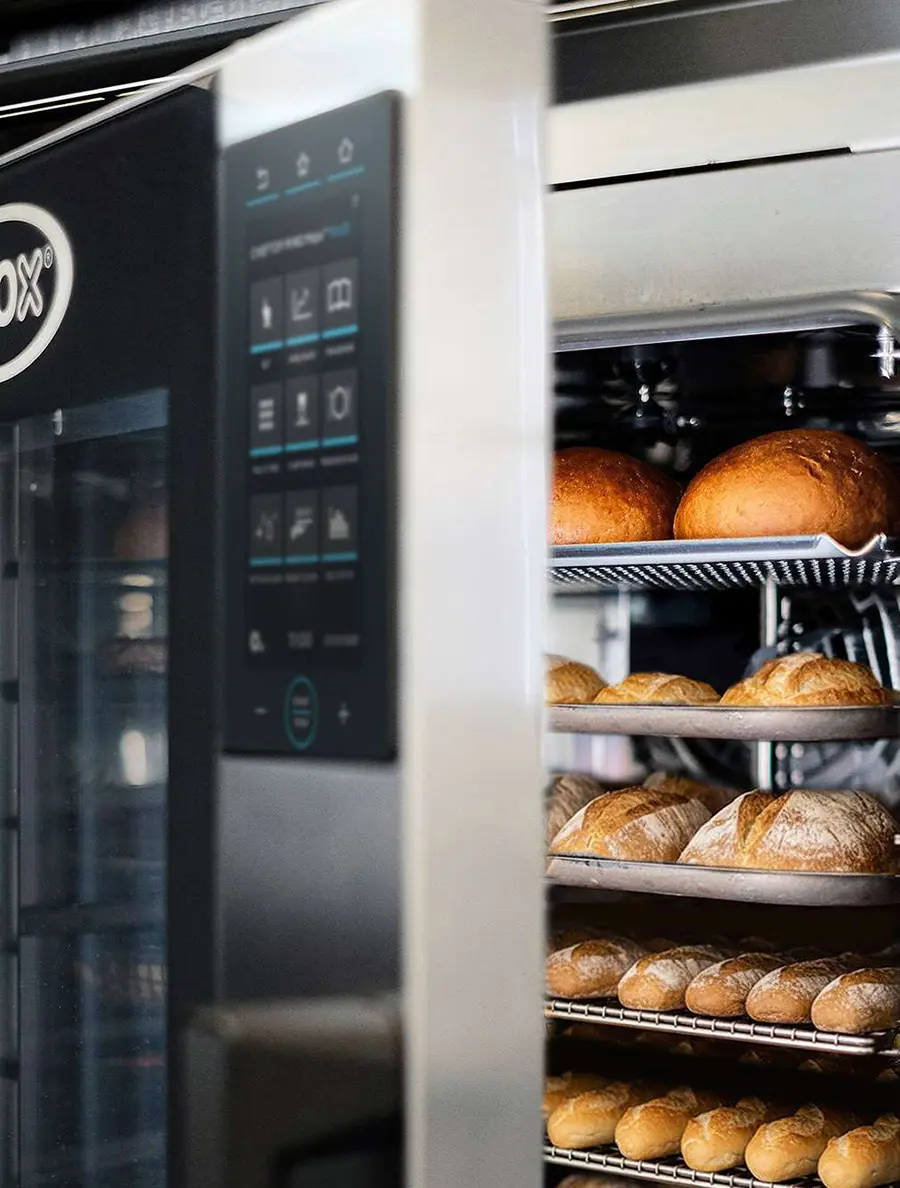
Baked goods are unforgiving. A croissant that is two minutes over comes out with a different colour and a different texture. A sponge baked in a chamber with too much residual humidity will not set properly in the centre regardless of how accurate the temperature is. Bread that bakes unevenly across a full tray load tells you the airflow is wrong, and no amount of rotation or guesswork will compensate for a fundamentally uneven chamber.
The three things that matter most in a bakery oven are heat distribution, humidity control, and repeatability. Heat distribution is about how evenly the temperature reaches every tray in the chamber, not just the ones closest to the elements or the fans. Humidity control is about being able to inject steam at the right moment, sustain it precisely, and extract it cleanly when needed. Repeatability is the one that tends to get overlooked: the ability to produce the same result from the same programme regardless of how full the oven is, what time of day it is, or who is operating it.
Repeatability is not a luxury for a busy bakery. It is the difference between a product you can put on the counter with confidence and one that varies enough to be noticed. The oven either delivers it or it does not.
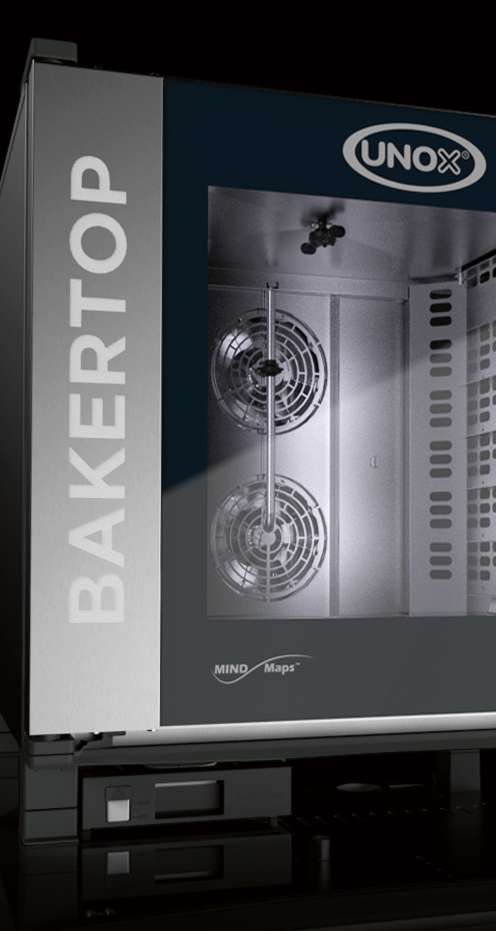
The Unox BAKERTOP MIND.Maps range is built around all three. The chamber design and fan configuration are engineered specifically for bakery tray sizes, distributing air evenly across each 600x400 mm pan. The steam system measures and adjusts humidity continuously during the bake, not just at the start of a cycle. And the Adaptive.Cooking technology monitors what is happening in the chamber in real time, making small corrections to ensure the result at the end matches the programme, even when conditions vary.
What the MIND.Maps technology means in practice
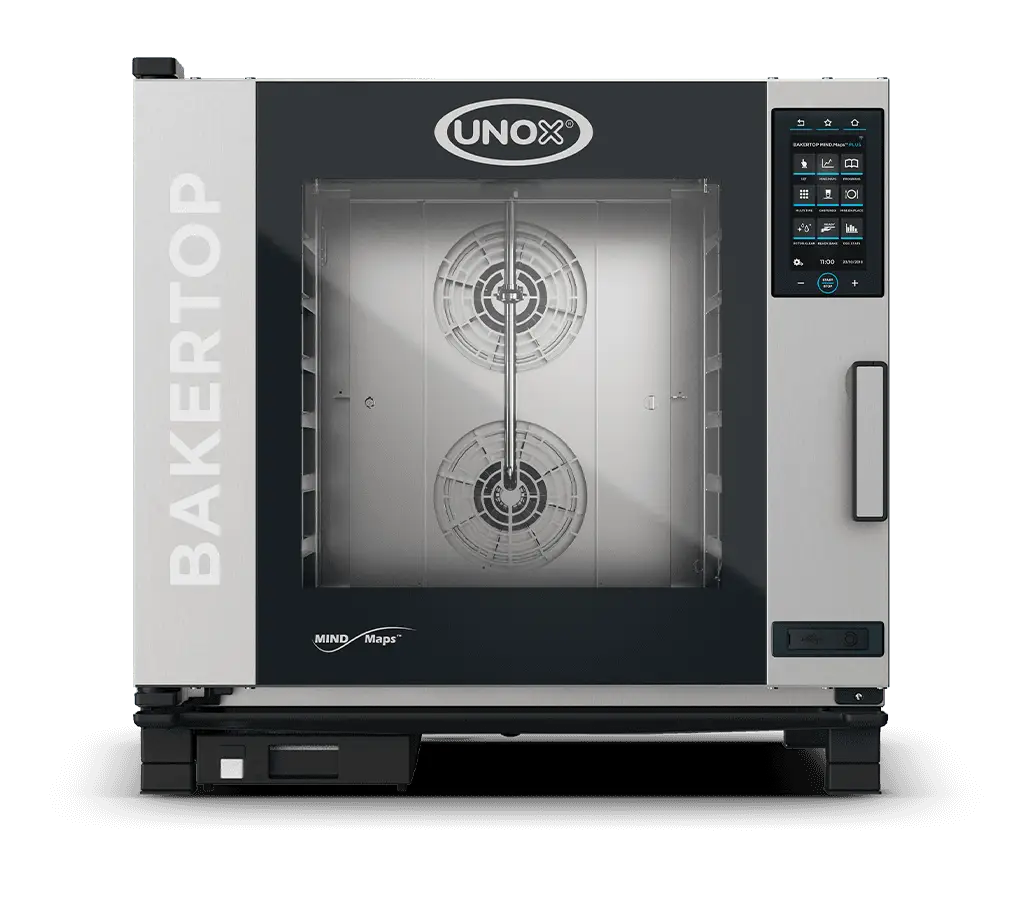
The name deserves a brief explanation because it is not just marketing terminology. The Mind.Maps interface allows the baker to programme a baking cycle visually, mapping each stage of the process: temperature, humidity, fan speed, steam injection, and extraction. Those programmes can be saved, recalled, and shared across multiple units. A recipe dialled in by an experienced pastry chef can be run reliably by any operator on any shift.
Adaptive.Cooking goes a step further. The oven's sensors measure the actual conditions inside the chamber during the bake and adjust the cycle accordingly. If a full load of croissants is putting more moisture into the chamber than a lighter load would, the oven accounts for it. The result is consistent without requiring the baker to intervene every time the load changes.
Multi.Time allows several different products to be baked simultaneously, each running on its own timer and programme. Mise.en.Place coordinates the readiness of those products so that everything finishes at the right moment rather than staggering. For a pastry operation that needs to have multiple lines ready for a morning service, these are not minor conveniences.
The range: countertop and floor-standing configurations
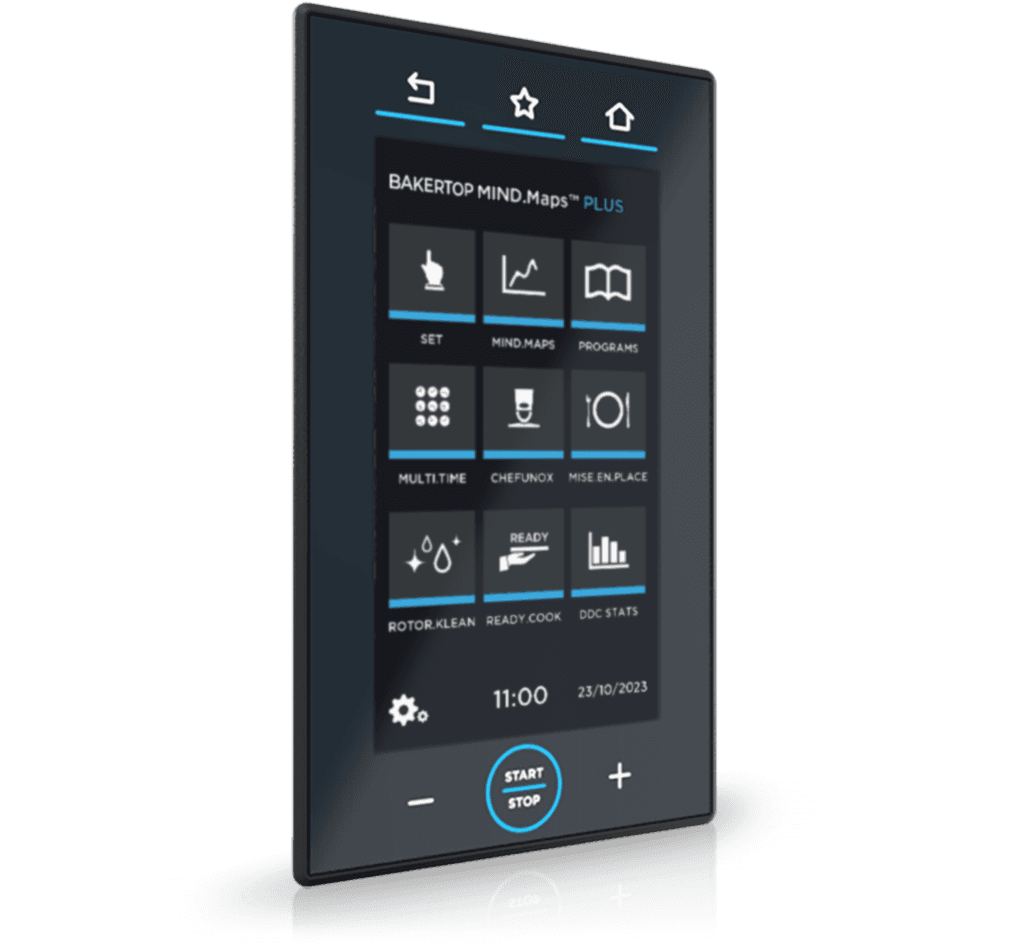
The BAKERTOP MIND.Maps is available in both countertop and floor-standing formats, which matters for how it fits into different types of operation.
The countertop models handle six trays of 600x400 mm and are well suited to artisan bakeries, patisseries, and restaurant pastry sections where output is high but the kitchen footprint is limited. The floor-standing BIG models accommodate larger tray capacities and are the right specification for operations with significant volume requirements. Both use the same MIND.Maps interface and the same core technology, so the choice between them is primarily about production scale rather than capability.
The 80 mm tray spacing across the range is worth noting. It provides enough vertical room for proper rise and development, which matters particularly for anything with a leavened structure. Tighter spacing compromises the bake; the BAKERTOP MIND.Maps is designed to avoid that trade-off.
Who the BAKERTOP MIND.Maps is the right fit for
The honest answer is: any operation where baking is a significant part of what the kitchen does, and where the results need to be consistent and repeatable. That covers a wide range.
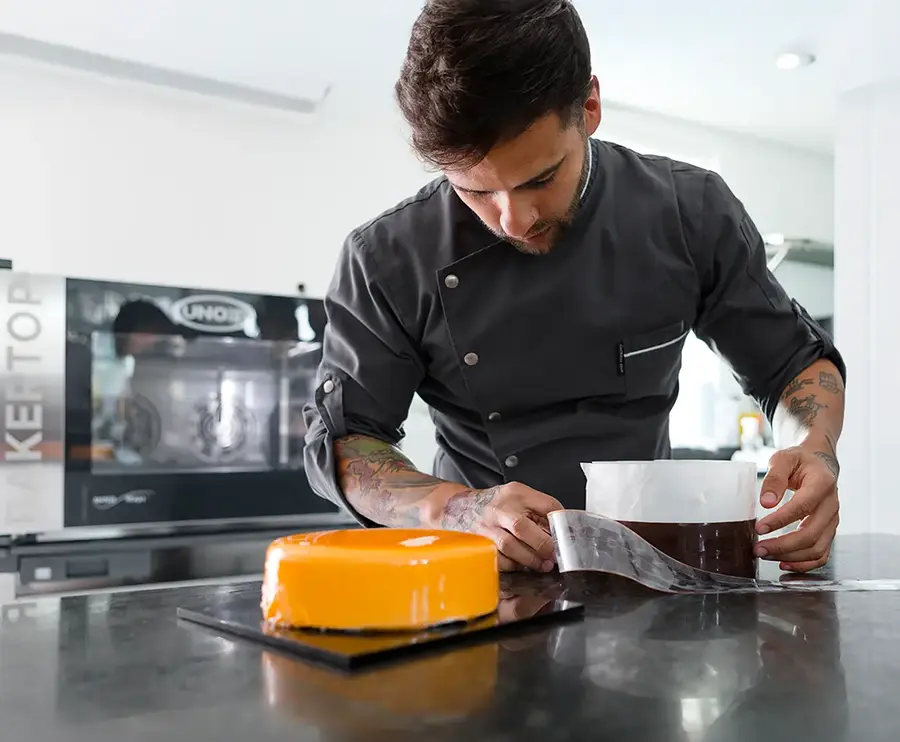
For a standalone artisan bakery or patisserie, the MIND.Maps technology gives a skilled baker the tools to encode their expertise into the oven's programming rather than relying on tribal knowledge that walks out the door when a key member of staff leaves. For a hotel kitchen or restaurant with a serious pastry section, the ability to run multiple programmes simultaneously with coordinated finish times changes how a small team can manage a complex morning service. For a catering operation baking at volume, the consistency across a full load and the automatic cleaning function at end of service reduce the operational overhead considerably.
The common thread is that the BAKERTOP MIND.Maps rewards the investment with results that a general-purpose oven simply cannot match in a bakery context. It is a specialist piece of equipment, and it performs like one.
Getting the installation right
A bakery oven of this specification needs careful thought at the kitchen design stage. The BAKERTOP MIND.Maps requires a three-phase power supply, a water connection, and a drain. Extraction and ventilation need to be planned around the steam load the oven produces during a full day's operation. These are not afterthoughts; they are part of the specification, and getting them right before the unit is delivered is considerably easier than correcting them after.
We carry out the full installation ourselves: site assessment, power and plumbing infrastructure review, positioning within the kitchen layout, commissioning, and staff training on the MIND.Maps interface. The oven's capabilities are considerable, and a proper handover makes a real difference to how quickly an operation gets the most from it.
Frequently asked questions
Is the BAKERTOP MIND.Maps suitable for a small artisan bakery, or is it designed for large-scale production?
Both, depending on the configuration. The countertop model handles six trays of 600x400 mm and is a genuinely workable specification for a small artisan bakery or patisserie. The technology is the same as in the larger floor-standing models; it is the capacity that differs. For a small operation producing high-quality baked goods across multiple product lines, the programme storage and Adaptive.Cooking features are arguably more valuable than they are in a high-volume setting where fewer variables are in play.
What does Adaptive.Cooking actually do, and does it matter for an experienced baker?
Adaptive.Cooking monitors the conditions inside the oven chamber in real time and makes small adjustments to the baking cycle to compensate for variables such as load size, product temperature on entry, and ambient humidity. For an experienced baker, it means that a programme dialled in for a full load still performs correctly when the load is lighter, without manual intervention. The oven does not replace the baker's knowledge; it applies it more consistently than a static programme can.
Can the BAKERTOP MIND.Maps handle both bread and pastry in the same operation?
Yes. The steam and humidity management system covers the full range of bakery products: enriched doughs, lean bread, laminated pastry, choux, sponges, and confectionery. Each product type requires a different approach to temperature, humidity, and airflow, and the MIND.Maps interface allows those differences to be programmed precisely and saved as individual cycles. Multi.Time allows different product types to run simultaneously on separate timers.
What does the installation process involve, and how long does it take?
We assess the site before the unit is ordered, confirming power supply, water connections, drainage, and ventilation requirements. Once those are in order, delivery, positioning, connection, and commissioning are typically completed in a single visit. We also carry out a full handover on the MIND.Maps interface so the team is confident with the equipment from the first service. Lead times vary depending on the configuration; we will give you a clear timeline at the consultation stage.
Does Spiteri Catering provide ongoing support after installation?
Yes, through our in-house technical support service covering routine servicing, preventative maintenance, and emergency repairs. For an oven that is central to daily production, that support needs to be reliable and local. Ours is.
If you are still deciding between a bakery-led setup and a gastronorm-based cooking workflow, our guide to choosing the right Unox oven explains the practical differences between BAKERTOP and CHEFTOP.
If you are specifying a bakery oven for a new kitchen or reconsidering what your current equipment is capable of, we would be glad to talk it through. We cover the full process from initial consultation and design through to professional installation and technical support after handover. Get in touch with the Spiteri Catering team to start the conversation.
Related reading: From Blank Canvas to Working Kitchen: The Zigumar Restaurant Fit-Out | How to Plan a Commercial Kitchen in Malta | Clean Air Is Not a Luxury in a Commercial Kitchen