
A Clean Blue Flame:
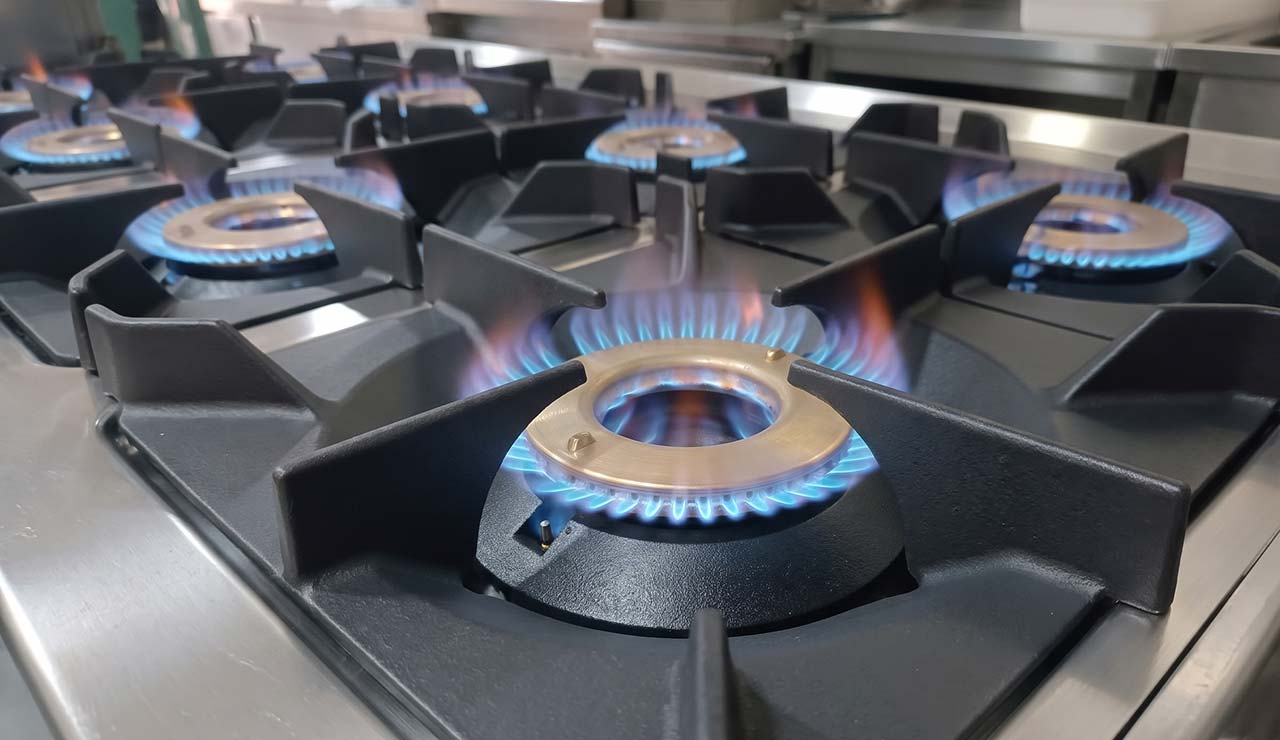
A gas burner reports on its own condition every time it is lit. A crisp blue flame sitting evenly around the crown means gas and air are mixing as they should. A lazy, yellow-tipped flame, a crown with dead ports, or a burner that needs a second click and a hopeful wait all tell the opposite story. The kitchen pays for it in slower pans, sooty bases, and a team that has learned to cook around the stove instead of with it.
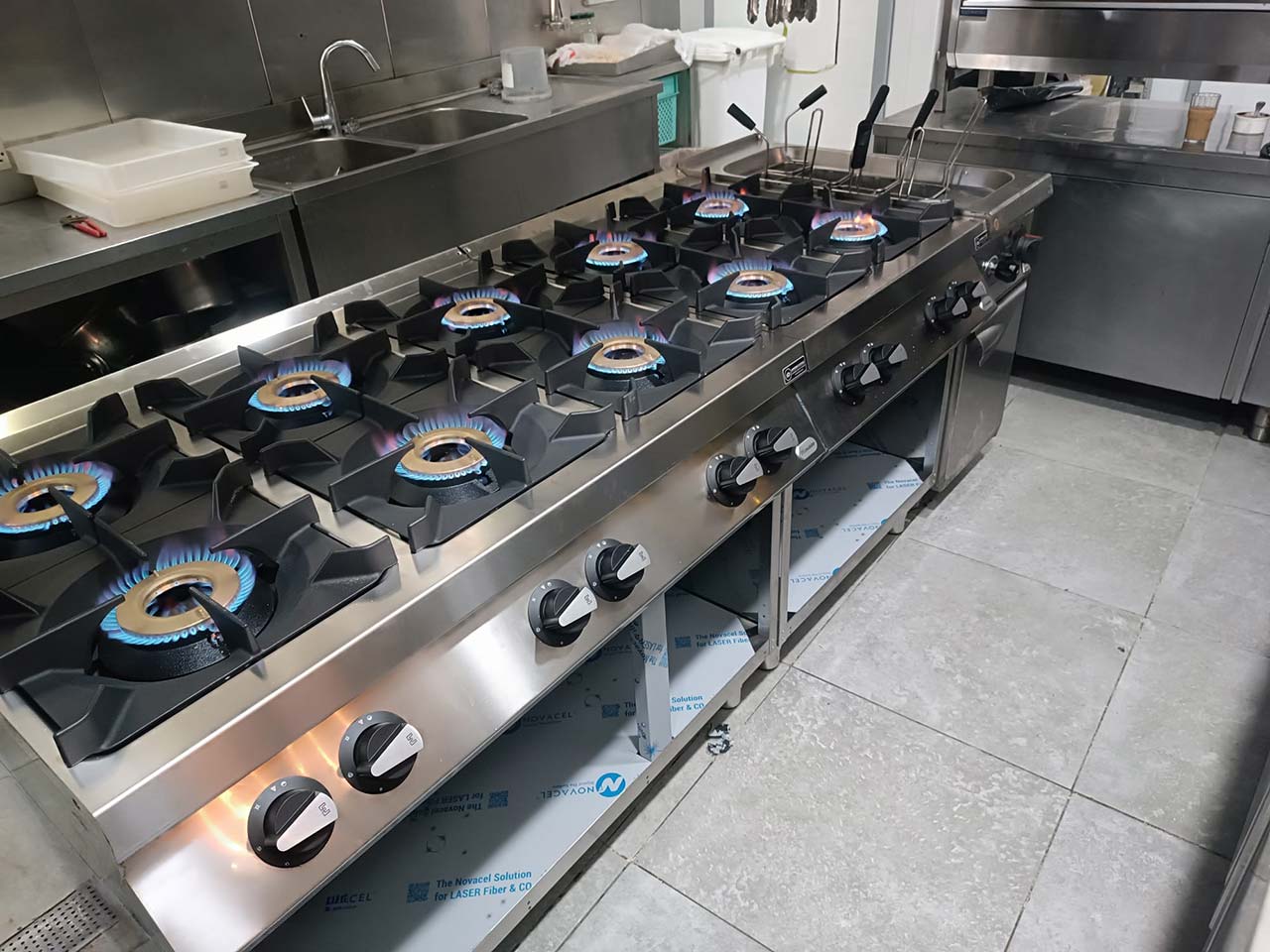
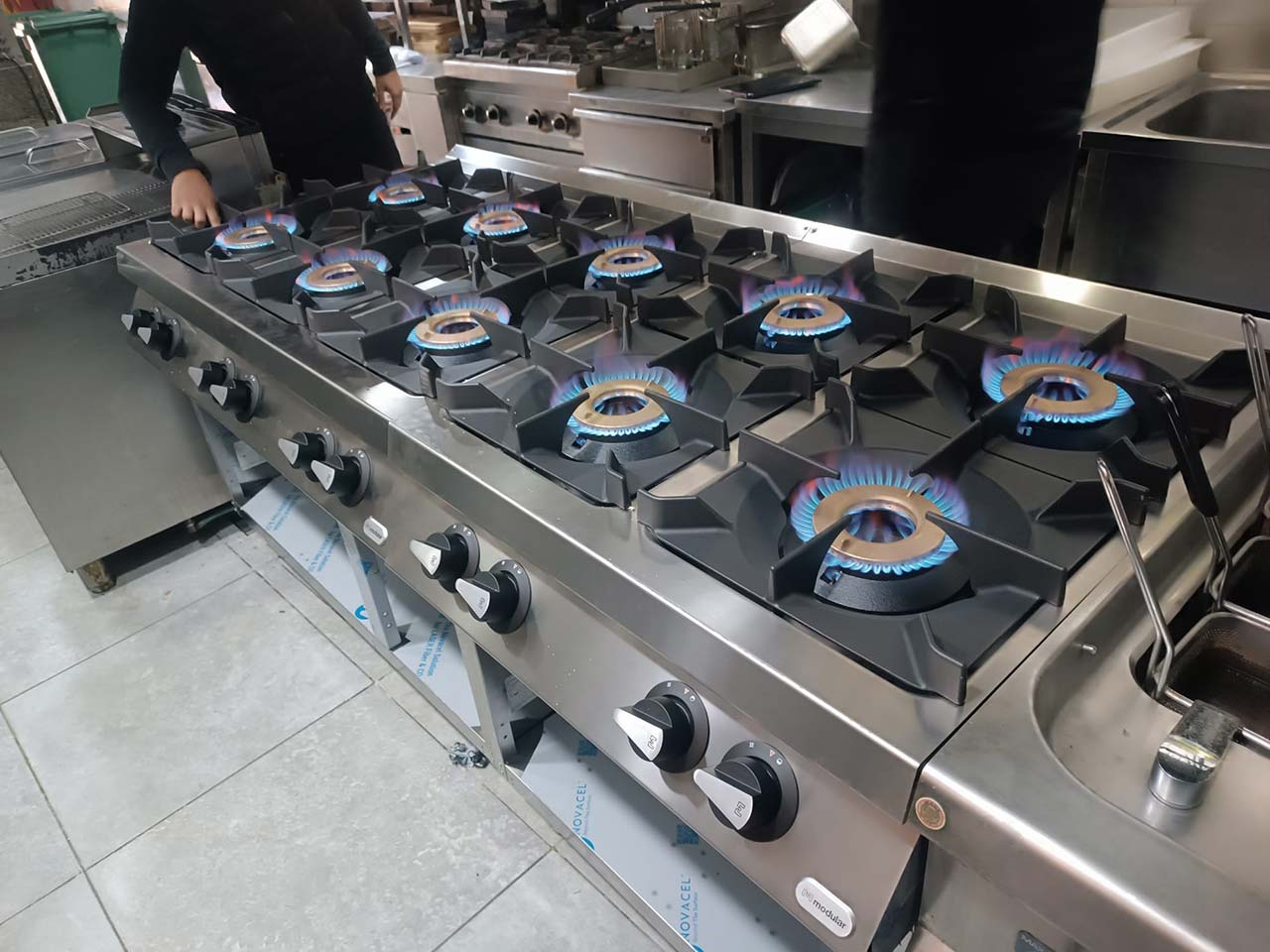
We recently installed a new modular gas range at Churchill in Xlendi, the restaurant that started life as a boathouse on the bay more than eighty years ago and is now known for its lava-stone steaks. Our photographs of the new line, lit and ready for service, show what a working kitchen looks like when every burner fires the first time and burns clean. It is a good moment to set out what a new range gives a team and how to tell when the old one has reached the end of its working life.
Heat you can rely on, burner after burner.
The first benefit is consistency. Burner ports wear, block, and distort over years of boil-overs, cleaning, and heat cycling. Each small failure shifts the flame pattern, and the result is a hob where one burner runs hot, another struggles to bring a stockpot up, and the team quietly allocates dishes around the weak spots.
A new range resets all of that. Every burner delivers its rated output, the flame sits where it should under the pan, and heat comes back quickly when a cold pan goes on. For a line cooking to order, recovery is what the team feels most: how fast a pan returns to temperature after a portion of fish or a ladle of stock goes in. That is the difference between a ticket leaving the pass on time and a ticket waiting on a pan.
A clean flame wastes less.
A yellow flame is a sign of incomplete combustion. Some of the gas going into the burner leaves as soot and carbon monoxide instead of heat in the pan. It shows up on the bases of pans, on the canopy filters, and on the gas bill. Correctly set burners on a new range; they burn their fuel fully, so more of the gas you buy ends up as cooking heat.
The team feels the difference too. Heat that misses the pan goes into the room, and in a Maltese kitchen in August the room is already hot enough. A range that puts its energy where it belongs makes the line a more bearable place to work through a long service.
Safety built into every burner
Commercial gas ranges built for the European market today carry a flame failure device on each burner. If the flame goes out, whether from a boil-over or a draught, the gas to that burner shuts off. Older ranges may predate this protection or have thermocouples that have worn to the point of being unreliable.
The controls matter as well. Firm, clearly marked knobs that turn smoothly and hold their setting let a cook adjust heat by feel in the middle of service. Worn spindles and loose knobs turn that into guesswork, and guesswork on a gas line slows everyone down.
When a team starts cooking around particular burners, the range has stopped serving the kitchen and the kitchen has started serving the range.
Easier to keep clean, easier to inspect
Modular ranges are built with pressed worktops and spillover trays, and the heavy cast-iron pan supports lift straight off for cleaning. Fewer seams and crevices give grease less ground to build up between deep cleans. That helps with hygiene inspections, keeps the line looking the way a professional kitchen should, and reduces the build-up of grease close to the flame and the canopy above it.
Knowing when to replace instead of repair
Plenty of ranges are worth servicing. A blocked injector, a tired thermocouple, or a stiff gas valve is a routine repair, and it makes sense to fix it. The case for replacement builds when the repairs start to repeat: burners that fail again soon after service, corroded burner bodies, cracked pan supports, a top that has warped so pans rock, or valves and parts that can no longer be sourced. A menu that has outgrown the number of burners on the line is a reason in its own right.
Timing is a decision too. Autumn and winter are the natural window for most kitchens in Malta and Gozo. Trade is quieter, a closed day is easier to find, and the new range has months of service behind it before the summer arrives.
What a new range needs from the kitchen around it
A range is only as good as the supply feeding it and the canopy above it. Before we supply a new line, we look at the gas supply and whether it can carry the total output of the new burners, the position of the range under the extraction canopy, and how the line sits beside the fryers, the prep area, and the pass. On larger changes, that becomes a kitchen design question as much as an equipment one.
Our installation covers delivery, connection, calibration, testing, and training for the team who will cook on it. After that, the range is backed locally: we hold spare parts for modular here in Gozo, so a worn component is a quick swap instead of a long wait.
Frequently asked questions
How do I know if my gas range needs replacing or just servicing?
If a service restores clean, even flames and the range stays that way, servicing is the right call. If the same faults return within weeks, parts are hard to find, or the body and top are corroded or warped, replacement usually gives the kitchen more for its money and its time.
Can a new gas range connect to our existing gas supply?
Often it can, but a new range may draw more gas in total than the old one, and the existing pipework and regulator need to be able to deliver it. We check the supply before installation so the range performs as it should from the first service.
Is it worth replacing a range that still works?
A range that lights is not always a range that performs. Slow recovery, uneven heat, and soot on the pans cost the team time on every service. If the line is holding the kitchen back, a replacement planned during the quieter months is far easier than an emergency one in July.
Do you hold spare parts for modular ranges?
Yes. We keep spare parts for Modular, alongside the other key brands we supply, at our base in Gozo, and our technicians service the ranges we install.
If your gas range is showing its age, or you would like to replace it before next season, we would be glad to talk it through. Get in touch with the Spiteri Catering team and let us understand what you need. We handle everything from initial consultation and design through to supply, professional installation, and ongoing technical support.
Related reading: The Parts Are Here. The Team Is Ready. | Before the Season Starts: A Pre-Summer Checklist for Commercial Kitchens in Malta | Clean Air Is Not a Luxury in a Commercial Kitchen