
TL;DR: A commercial coffee bar works best when the espresso machine, grinder, counter, and refrigeration are chosen together around your busiest hour, and our range covers the whole station, from a one-group machine for after-dinner espresso to a three-group setup built for a summer morning queue.
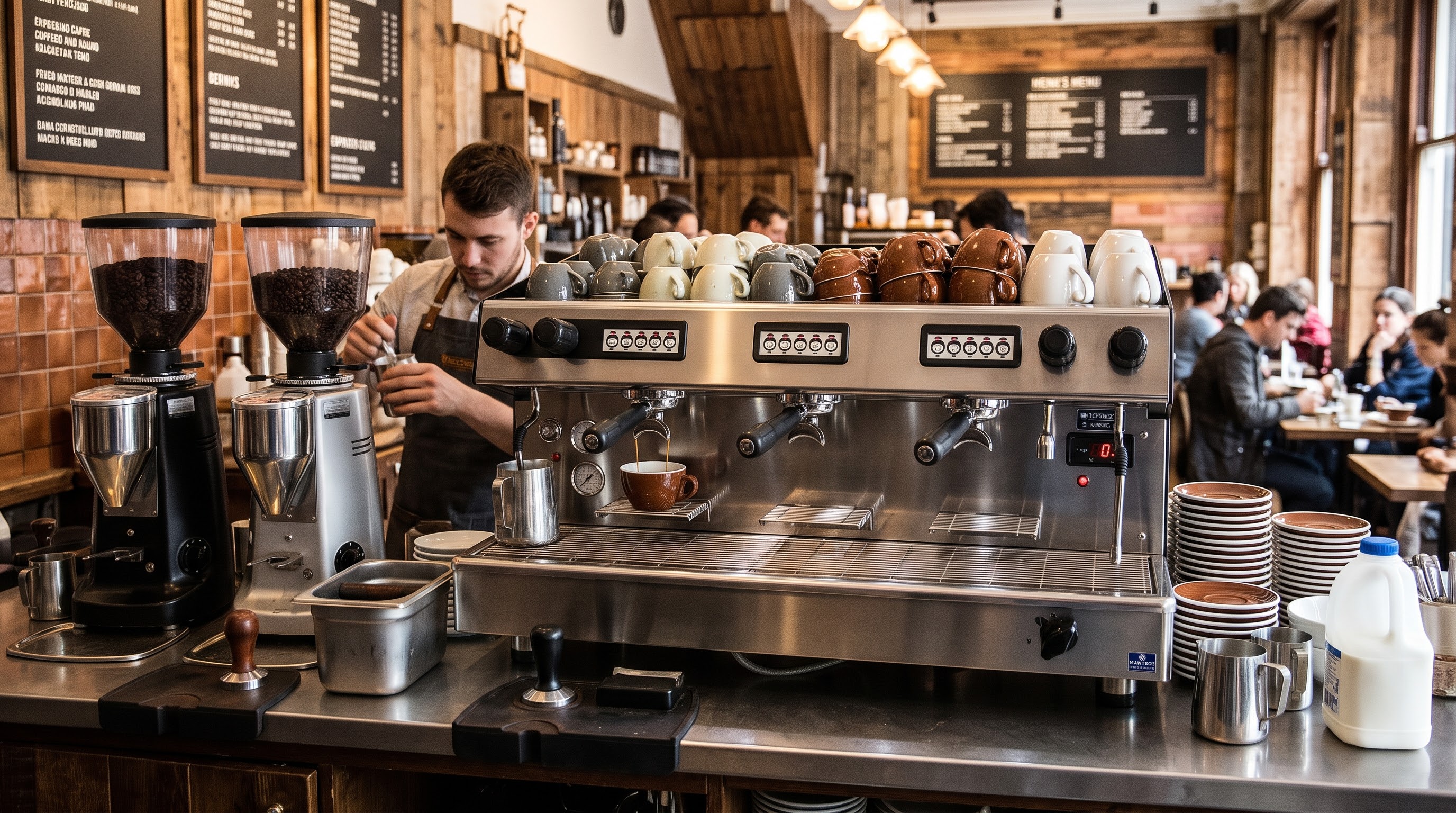
A good coffee bar is four pieces of equipment that behave as one: the espresso machine, the grinder, the counter they sit on, and the refrigeration beneath it. Chosen separately, they leave the barista working around the station. Chosen together, they settle into the rhythm of service and the queue moves. We supply every part of that station, and the right combination depends far more on how a venue trades than on how much space it has behind the bar.
Group count follows the queue, not the floor space
Our automatic espresso machines run from a compact one-group model with a 3 litre boiler, through a one-group 5 litre and a two-group 11 litre, up to a three-group machine with an 18 litre boiler. Each group is one barista pulling one shot at a time, so the number of groups sets the ceiling on how many coffees leave the bar in a busy ten minutes. The boiler sets how well the machine keeps up with steam and hot water while it does.
A restaurant serving espresso after dinner is well served by a single group. A hotel breakfast room or a neighbourhood café with a steady morning trade usually needs two. A beach club, a busy high street café, or anywhere that serves a crowd in a short window in July and August is where the three-group machine earns its place.
Automatic machines dose the water volumetrically, which means each shot is measured by the machine rather than judged by eye. That matters in Malta, where seasonal staff change from year to year. The coffee tastes the same whoever is on the bar.
The grinder decides what ends up in the cup
An espresso machine can only work with what the grinder gives it. Our range includes on-demand grinders with 1.2 kg and 2 kg hoppers, a touchscreen on-demand model, and dosing grinders with a 1.0 kg hopper and adjustable doses between 5 and 12 g. We also carry standard espresso grinders with 1.2 kg hoppers for venues with lighter volumes.
On-demand grinding produces each dose at the moment it is needed, so the coffee reaches the basket fresh and nothing sits in a chamber going stale between orders. The hopper size should follow the volume: a 2 kg hopper suits a three-group bar that would otherwise need refilling mid-service, while 1.2 kg is plenty for most restaurants and smaller cafés.
A counter built around the machine
The coffee machine counter is the piece most often left to chance, and it shapes every movement the barista makes. Our counters come in 1000, 1500, and 2000 mm lengths, at 600 or 700 mm deep, with compartments for one or two machines. Each one has a drawer, a removable used-coffee hopper with rubber damping set directly beneath the worktop, and a separate waste bin. The worktops are brushed AISI 304 stainless steel and the feet are height-adjustable, so the counter sits level on an uneven terrace floor as easily as on new tiles.
The knock box is the most-used fixture on any coffee bar. When it is built into the counter under the machine, the barista stays in one spot and the whole station runs faster.
A 1000 mm counter with a single compartment suits a restaurant bar. The 1500 and 2000 mm versions take two compartments, giving room for a larger machine alongside the grinder, or for two machines where a venue runs a separate takeaway point.
Cold milk, cold drinks, and the rest of the bar
Behind most coffee stations sits a refrigerated beverage counter, and ours hold between +2 and +10°C for milk, soft drinks, and bottled water. They range from a single-door 930 mm unit to a four-door 2670 mm run, with solid or glass doors, and several models include a refrigerated sink. Choosing where they sit follows the same logic we set out in our guide to choosing the right refrigeration: place the cold storage where the hands reach for it.
The range extends well beyond espresso. A semi-automatic juicer handles 38 oranges a minute for fresh juice at breakfast. A three-bowl slush machine with 10 litres per bowl suits beach clubs and family venues through the summer. For hotel breakfasts, conferences, and banqueting, programmable filter brewers with 2.5 litre vacuum jugs, Air Pot brewers, and percolators from 48 to 80 cups serve volume without tying up the espresso machine.
Water and cleaning keep the station consistent
Malta's hard water is as unkind to espresso machines as it is to dishwashers, a point we covered in detail in what your dishwasher is actually costing you. Scale builds in boilers and heating elements, and it slowly changes the temperature and flavour of every shot. Water treatment on the supply line protects the machine and the coffee.
Daily cleaning matters just as much. We stock detergent tablets for coffee modules and liquid detergent for fresh milk modules, so the cleaning routine uses products made for the machine.
Planning the bar as one station
The best coffee bars are planned with the rest of the venue. Water feeds, drainage, and electrical supply all need to be in the right place before the counter goes in, and the bar has to work with the flow of front of house as well as the kitchen behind it. Our design team can plan the station alongside a wider fit-out or on its own, and our technicians handle the installation, connection, and commissioning, so the bar is ready to serve from the first morning.
Frequently asked questions
How many groups does my espresso machine need?
Plan for your busiest half hour rather than your average day. One group suits a restaurant serving coffee after meals, two groups suit most cafés and hotel breakfast service, and three groups suit high-volume venues that serve a crowd in a short window.
What is an on-demand grinder?
An on-demand grinder grinds a single dose each time the barista needs one, instead of filling a dosing chamber in advance. The coffee stays fresher and less is wasted at the end of the day.
Can you supply the counter as well as the machine?
Yes. We supply coffee machine counters in 1000, 1500, and 2000 mm lengths with built-in used-coffee hoppers and waste bins, along with refrigerated beverage counters, so the whole station can be specified and installed together.
Do I need water treatment for a commercial espresso machine in Malta?
We recommend it. Malta's hard water causes scale in boilers and heating elements, which affects both the coffee and the life of the machine. Water treatment on the supply line is the simplest protection.
Is coffee equipment covered by a warranty?
All Spiteri Catering products carry a 12-month commercial warranty covering parts and labour, running from the date of delivery.
If you are planning a new coffee bar or rethinking the one you have, we would be glad to talk through what your service needs. Get in touch with the Spiteri Catering team and let us understand what you need. We handle everything from initial consultation and design through to supply, professional installation, and ongoing technical support.
Related reading: Crystal Clear: How to Keep Glassware Sparkling | The Glass on the Table: Why We Chose Rona | What Goes Where: Choosing the Right Refrigeration for Your Commercial Kitchen