
Barbecue Safety This Summer | Spiteri Catering
Summer in Malta means the outdoor kitchen earns its keep. Longer evenings, more guests, and the kind of sustained use that puts real demands on equipment. It also means more fires lit in more back gardens, on more terraces, and by more people who are new to the experience. That is worth acknowledging, without making a fuss of it.
At Spiteri Catering, we sell a lot of outdoor cooking equipment through the warmer months: Brabura gas grills, Maximus ceramic kamados, and the rest of the range we covered in our recent post, Serious About Fire. We are proud of what we stock. We are equally proud of the people who use it well. This post exists because both of those things matter to us: the equipment, and the person standing in front of it.
Gas grills: the basics that are easy to skip
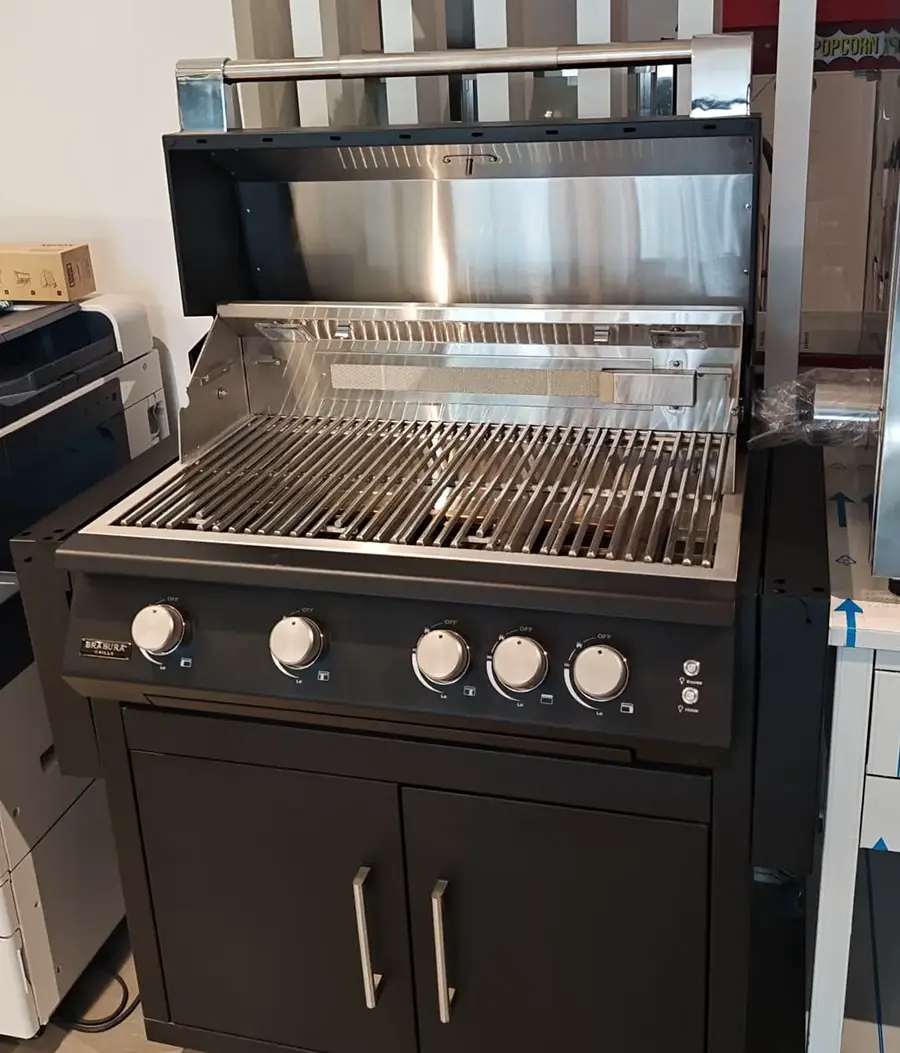
The Brabura gas grill is a well-made piece of kit, and well-made equipment inspires a certain confidence. That confidence is mostly earned. But gas grills reward a small amount of routine attention, and the beginning of the season is the right time to give it.
Before the first light of the year, check the gas hose. Look for cracks, kinks, or any section that has sat pressed against something hard over the cooler months. A hose in poor condition is not worth the risk; replacements are inexpensive and widely available. Check the connection at the regulator too: a proper seal makes no sound, and a small soapy bubble test around the joint will confirm it quickly.
Light the grill with the lid open. This is the single most common mistake people make with gas equipment, and the consequences of igniting a gas build-up inside a closed cooking chamber range from unpleasant to genuinely dangerous. Lid open, burner on, ignite. Let it run for a few minutes before you close up and start cooking. That is all it takes.
Keep the grill on a stable, level surface, away from fencing, overhanging structures, and anything that will catch a stray ember or a gust of heat. On a Maltese summer evening with the breeze coming off the sea, that gust can arrive without much warning.
The kamado: a different kind of fire management
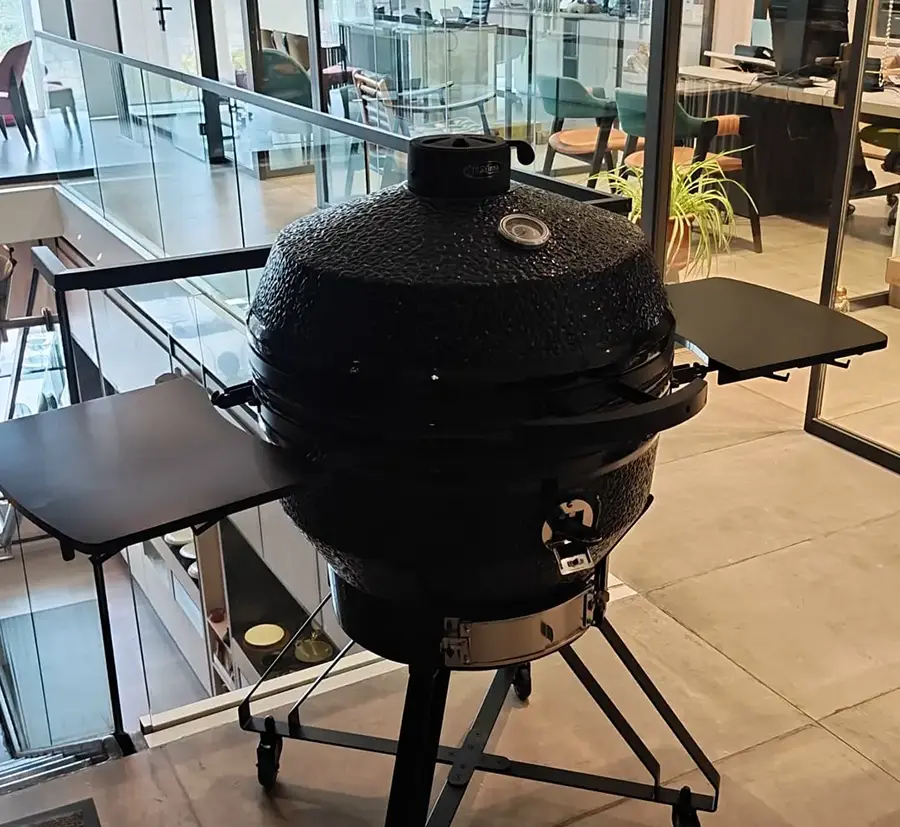
The Maximus ceramic kamado operates on a different logic to a gas grill, and it rewards people who take the time to understand it. The ceramic body retains heat with exceptional efficiency: once a kamado is at temperature, it holds that temperature for a long time, and it responds slowly to adjustments. That is a feature, not a flaw. It is also something worth internalising before your first cook.
Do not rush the lighting process. Use proper charcoal starters or natural fire lighters; avoid lighter fluid, which can leave residue in the ceramic and affect the flavour of everything that follows. Build the fire gradually, open the vents wide to establish airflow, and let the temperature rise steadily. A kamado brought up to heat too quickly, or starved of airflow too abruptly, can crack the ceramic over time.
The vent management is where the learning curve lives. The bottom vent controls the volume of air coming in; the top vent controls the exhaust. For low-and-slow cooking, both vents are barely open. For high-heat searing or pizza, both are open wide. The relationship between the two takes a few cooks to feel natural, but once it does, the control you have over the cooking environment is genuinely impressive.
Never douse a kamado with water to extinguish it. Close both vents completely and let it extinguish naturally over several hours. The ceramic retains heat long after the fire is out: treat it accordingly, and keep children and pets well clear until it has fully cooled. On a warm Maltese evening, that can take longer than you might expect.
A kamado that is treated with a little patience at the start of each cook will reward you with years of exceptional results. One that is rushed, overloaded, or extinguished carelessly will show the damage eventually. The equipment is built to last; how long it lasts is partly up to you.
General principles that apply to both
Keep a bucket of sand or a fire extinguisher within reach when you are cooking outdoors. Water is not appropriate for grease fires; sand is. A fire extinguisher rated for Class B fires handles both grease and gas. Neither takes up much space and neither needs to be used often. But knowing it is there changes how you cook: with a little more ease, and a little less anxiety.
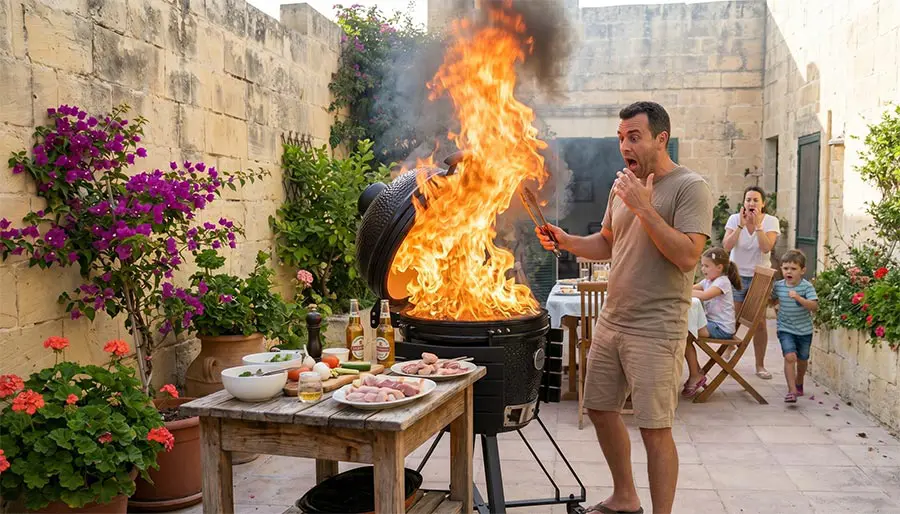
Never leave a lit grill or a live kamado unattended. This applies whether you are cooking a quick steak or running a long smoke. Step inside for a moment by all means, but do not leave the garden entirely. Outdoor fires are predictable until they are not.
Keep the cooking area clear. A folding table close to the grill, a bag of charcoal leaning against the cabinet, a cloth hanging over the handle: none of these are dramatic risks in isolation, but they add up. Give yourself room to work and room to react if something does not go as planned.
After cooking, make sure everything is properly off or fully extinguished before you go inside. Check the gas valve at the bottle, not just the burner controls. A kamado should have both vents fully closed. It takes thirty seconds and it matters.
A note on installation and positioning
If you are setting up a new outdoor kitchen or thinking about a more permanent arrangement for your grill or kamado, it is worth giving the positioning some proper thought. Proximity to the house, overhead clearance, prevailing wind direction, and the surface underfoot all affect both performance and safety. Our kitchen design team works on outdoor setups as well as commercial kitchens, and the same principles of workflow and spatial logic apply. If you are planning something more than a freestanding grill on the terrace, it is worth a conversation.
If you would like to discuss any of the equipment in this post, or talk through an outdoor kitchen setup for your home, we would be glad to help. Get in touch with the Spiteri Catering team and let us understand what you need. We handle everything from initial consultation and design through to supply, professional installation, and ongoing technical support.
Related reading: Serious About Fire: BBQ and Smoking Equipment for Everyone | Designing the Perfect Outdoor Kitchen | Getting Your Commercial Kitchen Ready for Summer