
Planning an outdoor cooking space that actually works
Most people buy the grill first. They find a model they like, they clear a corner of the terrace, and they deal with the rest as it comes. It is an understandable approach, and it produces an understandable result: a cooking area that functions well enough but never quite feels finished, with the worktop always a little too far away, the charcoal stored in an inconvenient spot, and the whole arrangement slightly at odds with how the evening actually unfolds.
The layout comes first. Not the equipment. If you are going to invest in a serious outdoor cooking setup, whether that is a gas grill, a ceramic kamado, or a dedicated smoker, the space around it shapes how well all of it performs. This post is about that space: how to think about it, how to plan it, and what decisions you need to make before anything is purchased or placed.
Start with how you actually cook
Before you think about specific pieces of equipment, spend a moment being honest about the kind of cooking you do outdoors. A household that grills a few times a week through the summer, mostly steaks and vegetables, has different requirements to one that smokes a brisket on Saturday mornings or makes pizza for eight people on a Friday night.
This matters because the equipment you choose determines how much space you need, what kind of surface you need around it, and how the whole area should be oriented. A Borniak cabinet smoker runs for twelve hours at a time and benefits from a covered area and easy access to a power point. A Maximus ceramic kamado needs clearance on all sides and a stable, heat-resistant surface beneath it. A Brabura gas grill needs a direct gas connection or a safe, accessible location for the bottle. None of these are complicated requirements, but they are worth thinking through before you have already decided where everything will go. If you would like a closer look at each piece of equipment before thinking about layout, our post Serious About Fire covers the full range in detail.
Understand the space you have
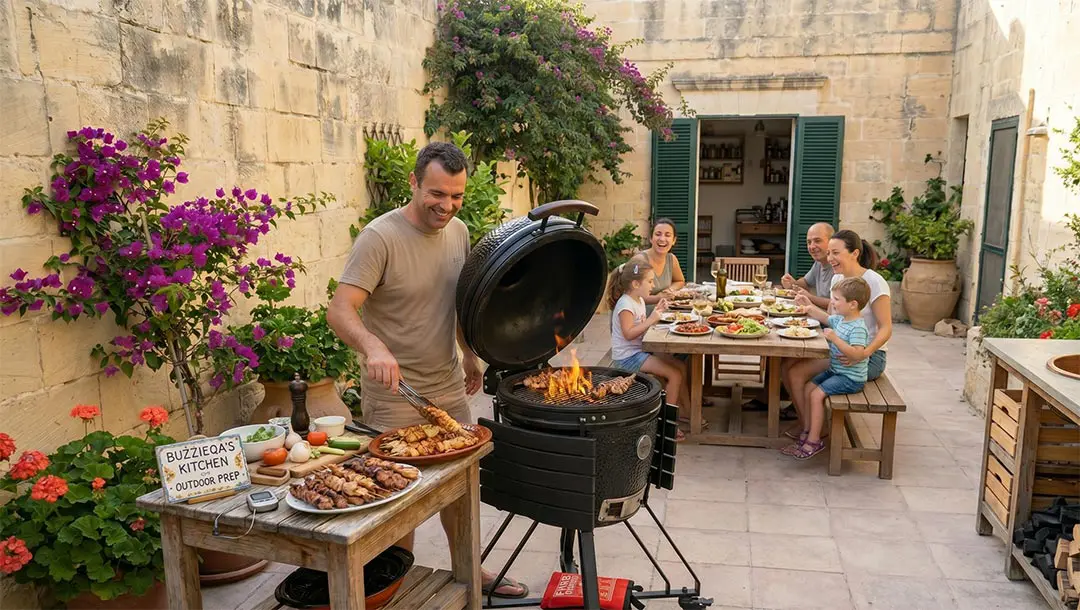
Outdoor kitchens in Malta work around the reality of Maltese outdoor spaces: terraces, flat roofs, back yards, and small garden areas. Most of them are not large, and most of them serve more than one purpose. The same space that hosts a barbecue on a Saturday evening is often a children's play area on Sunday afternoon and a quiet spot with a coffee on Monday morning.
The useful exercise is to mark out, even roughly, where the cooking zone will be, where guests will stand or sit while you cook, and where the route to and from the indoor kitchen runs. These three areas need to work together without creating hazards or bottlenecks. A grill positioned so that guests naturally cluster directly behind you is a problem. A setup where the path from the indoor kitchen crosses the cooking zone is another.
As a general rule, the cooking zone should be at one end or along one edge of the outdoor space, with clear separation between the hot equipment and the area where people gather. A minimum of a metre and a half of clear space in front of and beside any live-fire equipment is a reasonable starting point. More is always better.
Work surface: the most underestimated part of any outdoor kitchen
Every experienced outdoor cook arrives at the same conclusion eventually: you never have enough surface. You need somewhere to rest a plate of food coming off the grill while you manage the next round. Somewhere to set down tools. Somewhere to hold a tray of marinated meat waiting its turn. Somewhere to put a drink without it ending up on the floor.
The Brabura gas grill has folding side shelves built into the cabinet body, which helps considerably. The Maximus kamado has folding side tables on the wheeled stand. But these are cooking-side surfaces, not prep surfaces, and the distinction matters. Prep happens before the heat is on; it needs its own area, separate from the grill, with enough room to work comfortably without reaching over equipment or guests.
For a permanent or semi-permanent outdoor setup, a stone or tiled worktop surface alongside the main cooking equipment makes a significant practical difference. If you are working with a more flexible arrangement, a dedicated outdoor prep table kept at a consistent location in the cooking zone serves the same purpose and is easier to reposition as the space evolves.
The Brabura gas grill: your everyday anchor
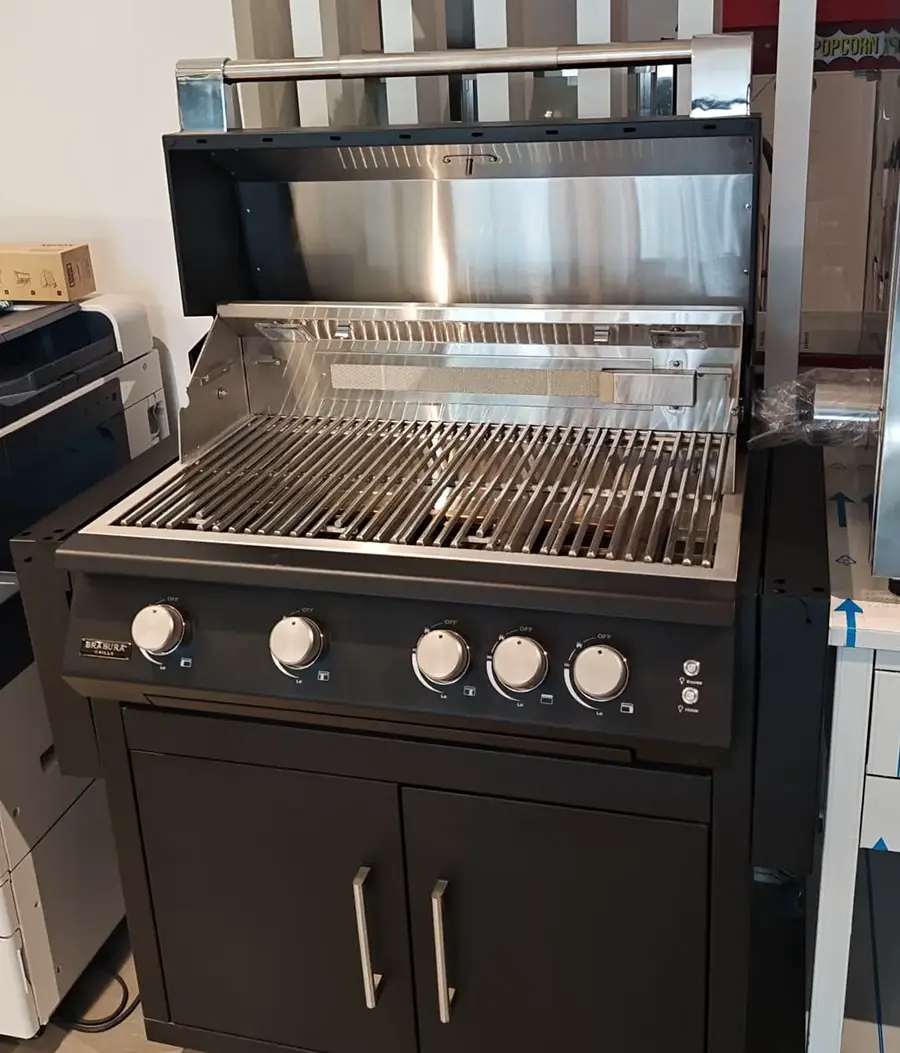
The Brabura gas grill is the most immediately practical choice for everyday outdoor cooking. It is a freestanding unit with a solid cabinet base, four burners, and heavy-gauge stainless steel grates that hold and distribute heat properly. Because it runs on gas, the connection point or bottle location largely determines where it can be placed. If you are connecting to a fixed gas supply, the position is set by the pipework. If you are using a bottle, keep it in the cabinet below the grill in a ventilated space, and make sure the hose is routed cleanly without kinks.
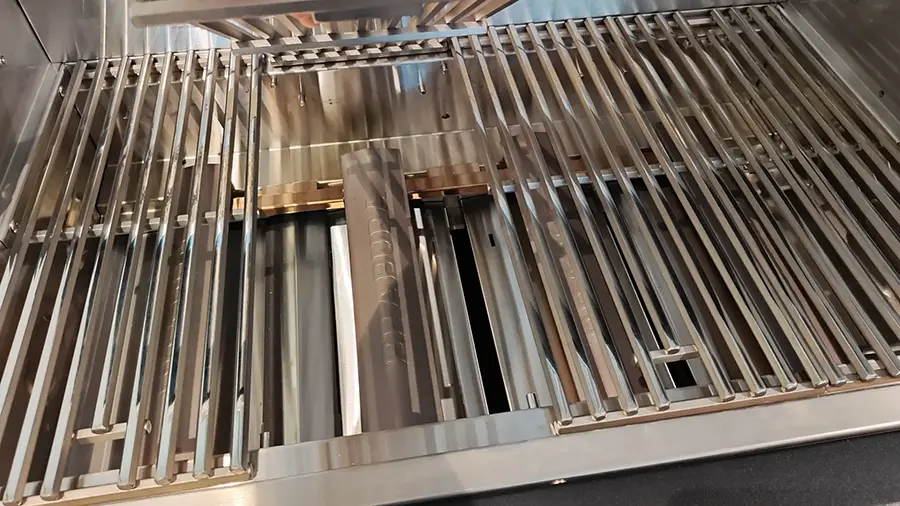
The grill itself needs clearance from walls, fencing, and overhead structures: a minimum of half a metre on each side and a clear metre above. The built-in side shelves give you useful staging space immediately adjacent to the cooking surface, which makes a real difference to how the cook flows in practice. Position it so that you are facing into the terrace rather than facing a wall, and you will find the whole experience considerably more sociable.
The Maximus ceramic kamado: the all-rounder that earns its place
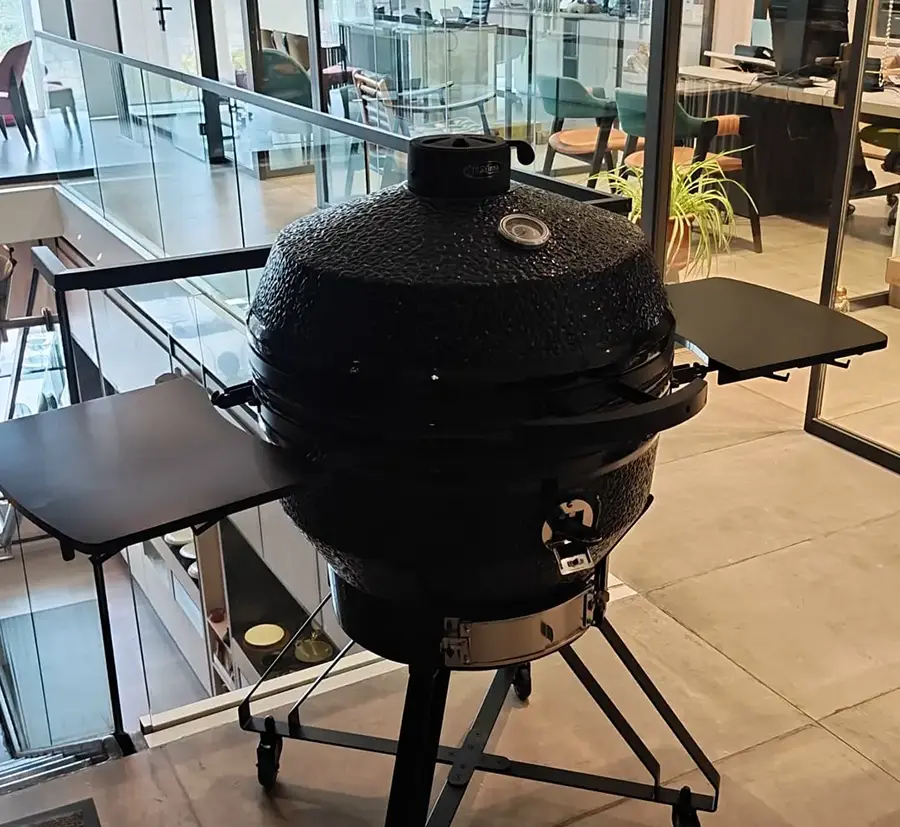
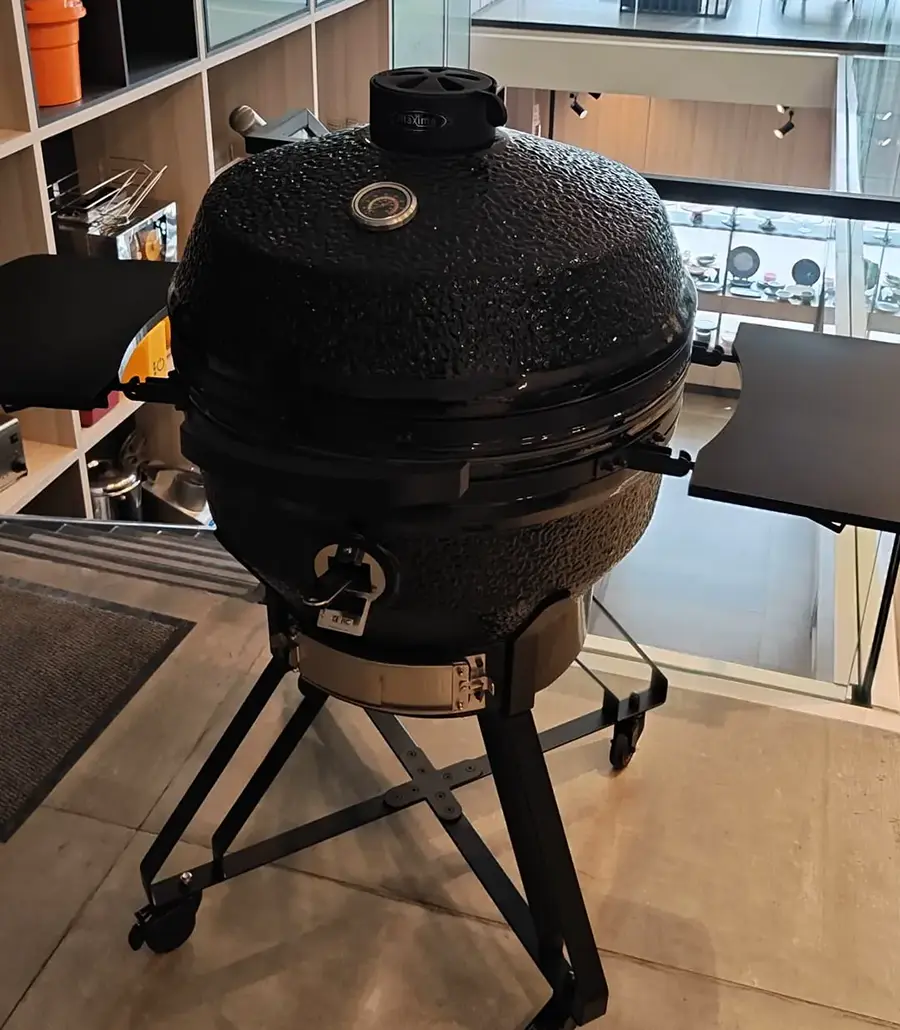
The Maximus kamado is a more versatile piece of equipment and, in some ways, a more demanding one. Its ceramic body retains heat long after a cook is finished, so placement matters not just during cooking but for the hours that follow. Position it away from anything that could be damaged by radiated heat, and make sure the wheeled stand sits on a stable, level surface. Because the kamado rewards slow, attentive cooking, place it somewhere you can stand comfortably for extended periods: the right height, good sight lines across the cooking area, and enough room to manage the vents and lift the lid without awkwardness.
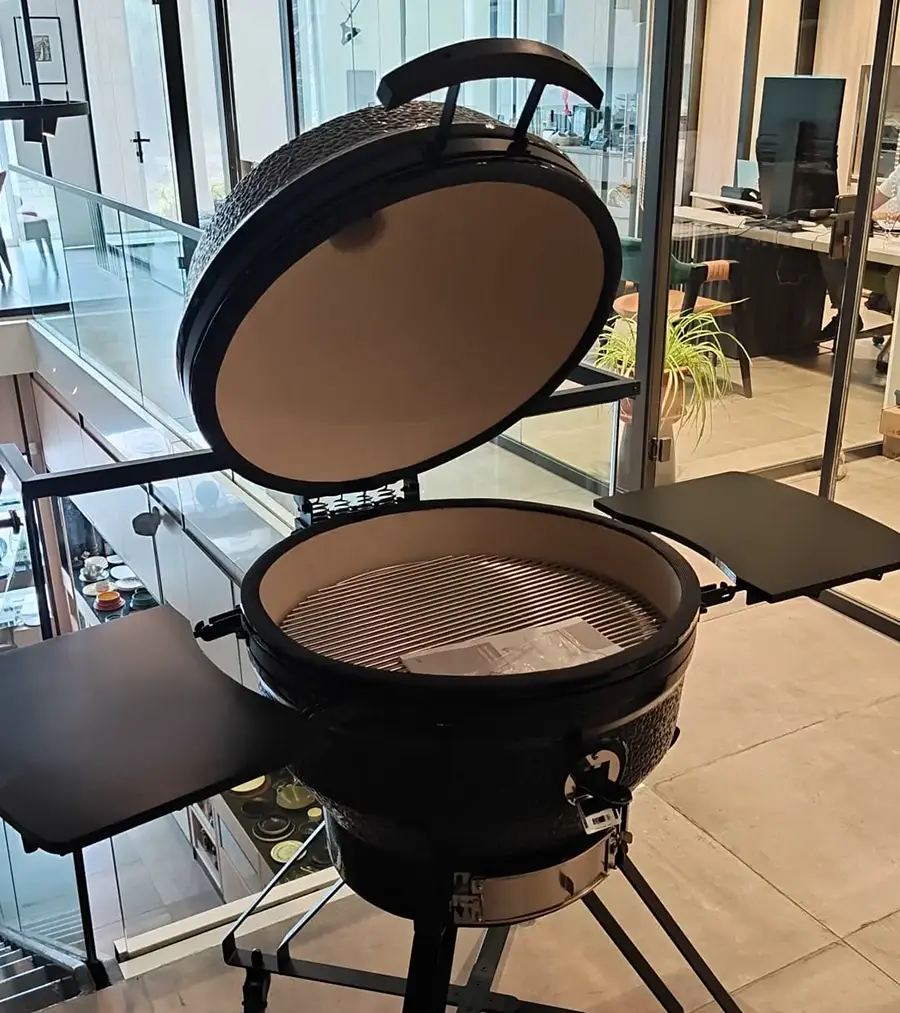
The adjustable top and bottom vents give precise airflow control, and the lid thermometer means you can manage temperature with confidence without lifting the lid and losing the environment you have spent an hour building. The wheeled stand makes it genuinely mobile, which is worth bearing in mind when you are planning the layout. Unlike a fixed installation, the kamado can move if the space needs to serve a different purpose, or if you decide the original position was not quite right after a season of use.
For the home cook who wants one piece of equipment that can smoke a brisket on a Saturday morning and cook a pizza on Saturday night, the kamado is the honest answer. It demands a little learning, particularly around charcoal management and airflow, but that is exactly the kind of investment in technique that serious cooking rewards.
The Borniak smoker: give it its own corner
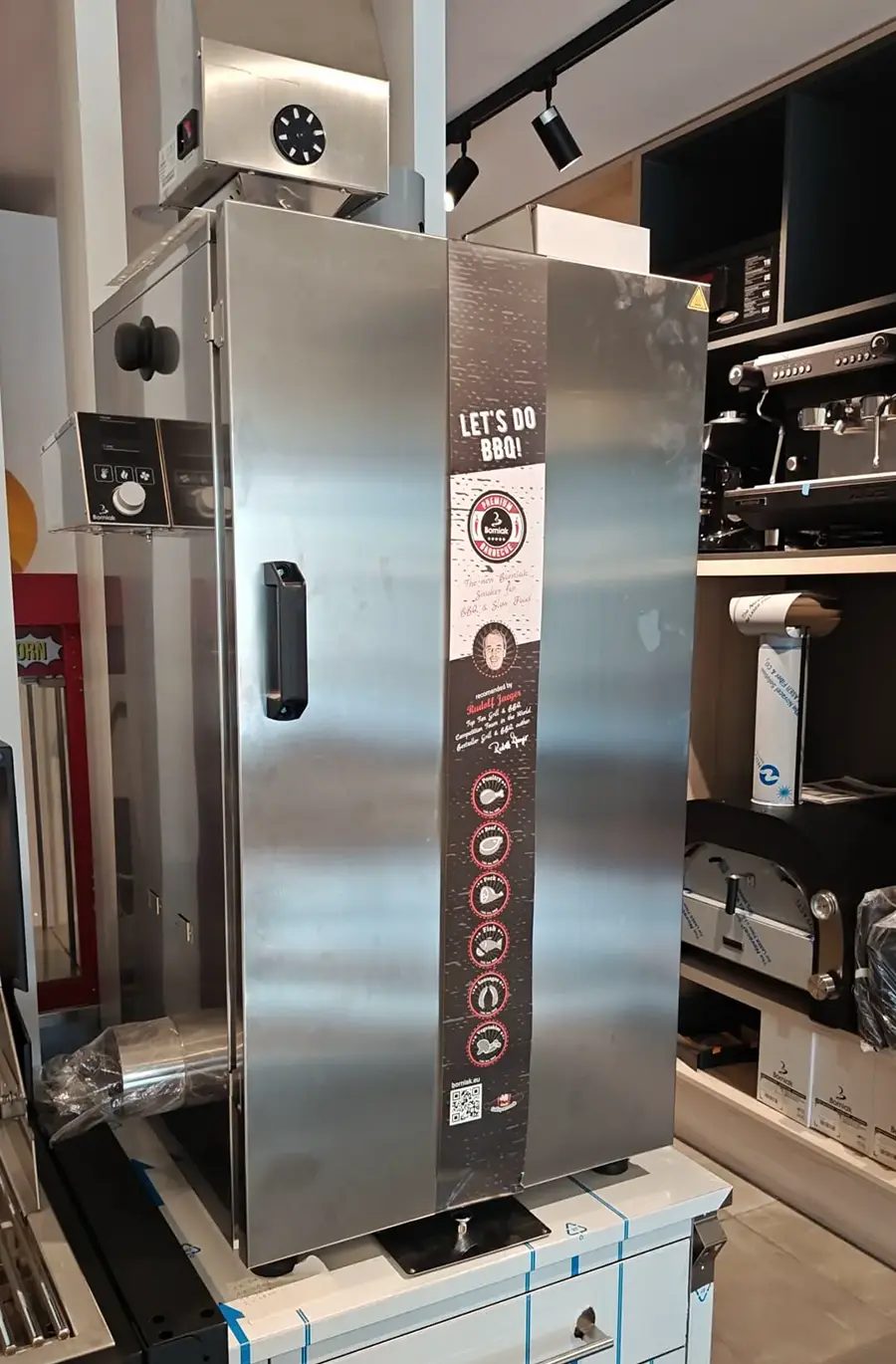
The Borniak has a different set of requirements to both the grill and the kamado. It runs on electricity, so a nearby outdoor power point is essential; plan for this early if you are thinking about a more permanent setup. It produces steady, controlled smoke over many hours, which means it benefits from a sheltered location where wind will not disrupt the chamber temperature. Unlike the grill and kamado, it does not require active management throughout the cook, so it does not need to be at the centre of the action.
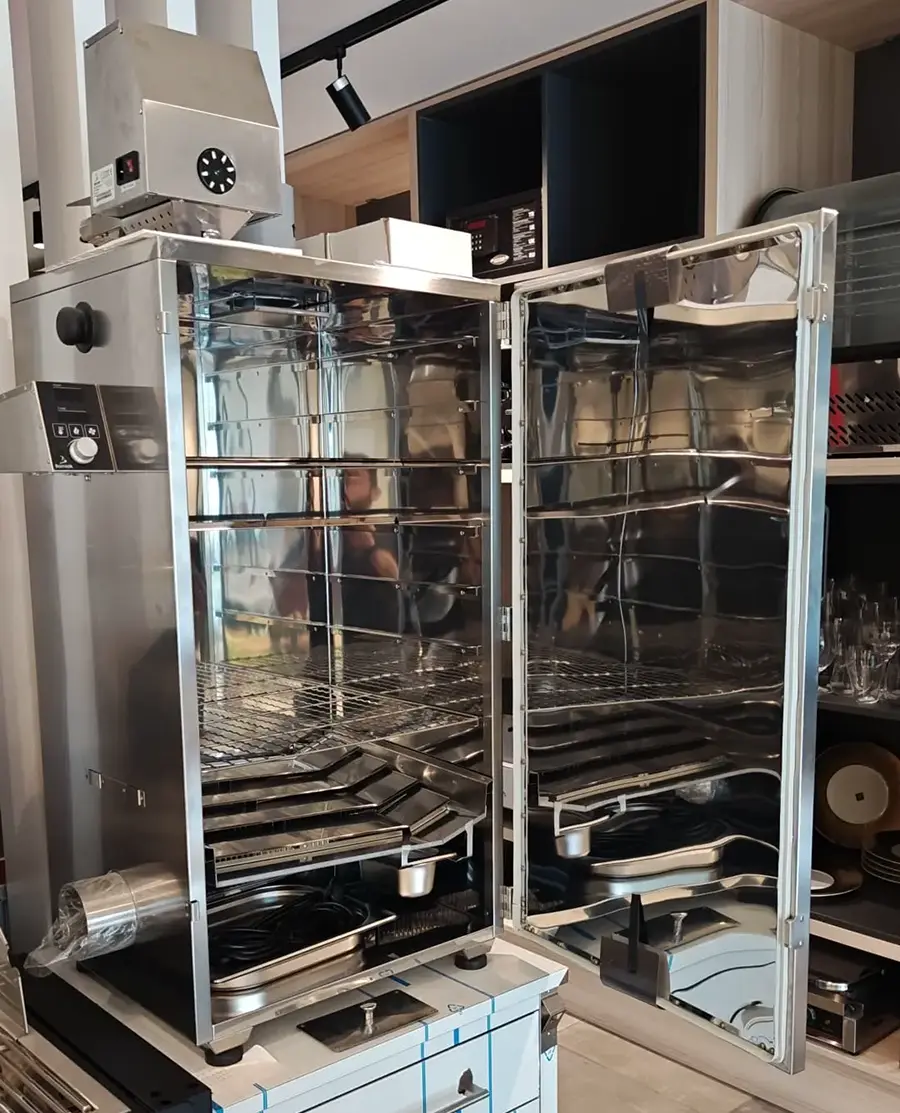
A dedicated corner of the terrace, slightly apart from the main cooking zone, suits the Borniak well. It is a cabinet-format unit with multiple adjustable racks and a stainless steel interior, and the capacity it offers is genuine: this is not a unit that produces a single portion. It produces results at a scale that suits a household gathering comfortably. Give it enough clearance for the door to open fully, a clear path for smoke to disperse, and a surface nearby where you can set smoked food as it comes out. That is all the planning it needs.
The Brabura wood-fired pizza oven: position it on the worktop
The Brabura wood-fired oven is a compact, countertop-format unit with a domed cooking chamber, an integrated analogue thermometer, and a chimney stack that vents combustion cleanly. Because it sits on a surface rather than standing independently, its position is determined by your worktop layout. It needs a stable, heat-resistant surface with adequate clearance above and behind the chimney stack. Stone or tiled worktops handle the radiated heat comfortably; timber or composite surfaces need a protective layer beneath the unit.
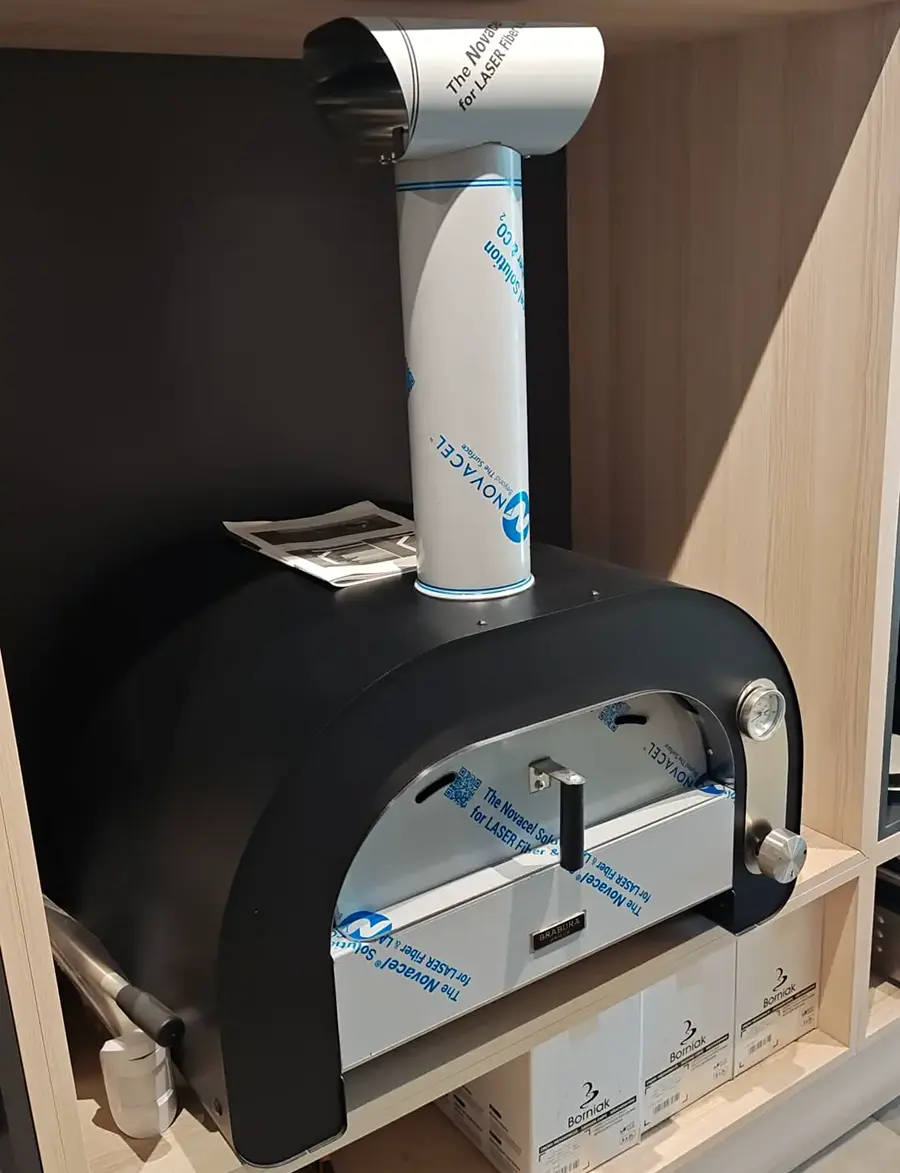
At operating temperature it produces the floor heat and ceiling radiance that a wood-fired pizza requires, and it is compact enough to sit as a permanent fixture on a well-planned outdoor worktop without dominating the space. Leave enough surface either side of it to work: a peel needs room to manoeuvre, and there should be somewhere to rest a finished pizza while the next one goes in.
Think about Malta's climate, not a generic one
Malta's outdoor season is genuinely long, and a well-planned outdoor kitchen will be used across most of it. But conditions change significantly between April and November, and a setup that works in May can be uncomfortable in August without some thought given to shade. A pergola, shade sail, or fixed overhead structure above the main cooking area makes cooking in direct afternoon sun considerably more bearable, and it protects the equipment from the UV exposure that degrades cheaper materials over time.
If you are installing any kind of fixed cover, make sure there is adequate vertical clearance above any live-fire equipment, and that the structure is built from materials that will not warp, fade, or deteriorate in salt air. This is especially relevant for properties near the coast. The prevailing summer wind direction is also worth a moment's thought: cooking with the wind at your back pushes smoke and heat away from you; cooking into the wind does the opposite, and it makes a noticeable difference to how comfortable the experience is, particularly with the kamado or the wood-fired oven where airflow directly affects the fire. For a fuller look at safe positioning and seasonal operation of this equipment, The Other Side of the Flame is worth reading alongside this post.
Storage: plan for it from the beginning
Charcoal, wood chips, gas bottles, covers, tools, and cleaning equipment all need somewhere to live that is dry, accessible, and out of the way. The most common mistake in outdoor kitchen planning is treating storage as an afterthought and ending up with everything stacked in an awkward corner or brought out of the garage before each cook.
The Brabura gas grill's cabinet base provides useful internal storage immediately beneath the cooking surface. For everything else, a dedicated weatherproof storage unit near the cooking zone, large enough to hold what you actually use, is worth its cost many times over in convenience alone. Plan for it from the outset rather than trying to accommodate it once the rest of the layout is set.
When it is worth getting advice
A straightforward terrace setup with a single grill and a prep surface is something most people can plan themselves, given a little thought. But if you are considering a more integrated arrangement, working with an awkward space, or thinking about a fixed installation that will be part of the terrace for years to come, a conversation with someone who has done it before tends to save both money and frustration. Our kitchen design team works on outdoor spaces alongside commercial kitchens, and the principles of layout, flow, and equipment placement apply equally in both contexts. If you are curious about what a fully integrated outdoor kitchen looks like when it is designed and installed professionally, our post on designing the perfect outdoor kitchen covers that end of the spectrum.
All of the equipment featured in this post is available to view in our showroom. If you are planning an outdoor cooking space at home and would like to talk through the right setup for your terrace, we would be glad to help. Get in touch with the Spiteri Catering team and let us understand what you need. We handle everything from initial consultation and design through to supply, professional installation, and ongoing technical support.
Related reading: Serious About Fire: BBQ and Smoking Equipment for Everyone | The Other Side of the Flame | Designing the Perfect Outdoor Kitchen