
TL;DR
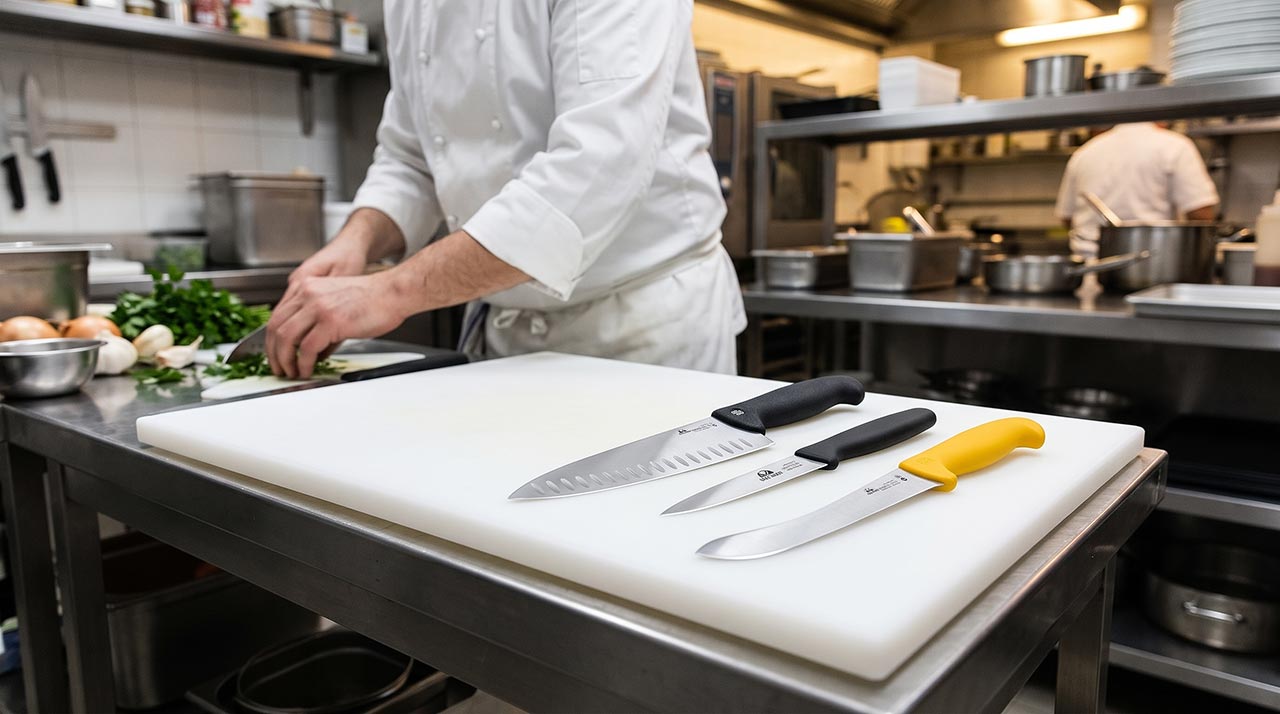
Most kitchen work comes down to three knives: a big one for volume, a small one for detail and a flexible one for proteins. The Due Cigni 25 cm scalloped chef's knife, 8 cm paring knife and 20 cm semi flex filleting knife cover all three. Keep them honed, wash them by hand and store them dry, and three good knives will outwork a block of twelve.
Lampuki season is in full swing. Whole fish are coming through the back door every morning, and someone on the team has a filleting knife in hand before the coffee is made. Autumn is busy at the board in every kitchen we visit. Fish to fillet, squash to break down, onions by the sack and chestnuts to score.
Walk along any line and look at what chefs actually reach for. It is rarely the full block. It is three knives, worn smooth at the handle, doing nearly everything. We have three from the Due Cigni range that make up that everyday kit.
The Chef's Knife: Volume
The Due Cigni 25 cm scalloped chef's knife is the one that never leaves the board. A 25 cm blade gives you length to rock through a pile of onions for soffritto, to slice a whole pumpkin in a few strokes and to chiffonade a bunch of parsley without stopping.
The scallops along the blade are hollows ground into the steel. They let a little air between the blade and the food, so slices of potato, aubergine and cheese fall away instead of clinging to the side. They do not make the knife sharper. They make it faster, because you stop wiping the blade after every few cuts.
The blade is 4119 Nitro B stainless steel, hardened to 55 to 57 on the Rockwell scale. That is a working steel rather than a showpiece. It takes the knocks of a busy line, resists corrosion and comes back to a keen edge quickly on a steel. The nylon handle is ergonomic and non slip, even with wet hands, and it is NSF certified for commercial kitchens.
The Paring Knife: Detail
The Due Cigni 8 cm paring knife handles everything too small or too fiddly for the big blade. Peeling, trimming, turning vegetables, hulling, segmenting citrus and scoring chestnuts for roasting are all paring knife jobs.
Its blade is 420C stainless steel with a lightweight polypropylene handle. It is a simple, honest workhorse. Chefs tend to own several, keep one in their apron and never worry when one disappears into a sack of potatoes. At 8 cm, the blade sits close to the hand, giving the control that detailed work needs.
Three good knives, kept sharp, will do more work than a block of twelve left blunt.
The Filleting Knife: Proteins
The Due Cigni 20 cm semi flex filleting knife is the specialist of the three, and in lampuki season it earns its place every day. A filleting knife needs to bend. It follows the backbone, rides over the ribs and slides between skin and flesh, leaving the meat on the fillet rather than on the frame.
Semi flex is the useful middle ground. The blade is flexible enough to follow the bones of a fish, yet firm enough to trim silverskin from a fillet of beef or bone out a chicken thigh. That is why one knife covers both fish and meat prep. More flesh on the fillet means better yield from every delivery, and that adds up quickly on a busy section.
Like the chef's knife, it is made from 4119 Nitro B steel with a non slip nylon handle and NSF certification.
Keeping the Kit Sharp
A sharp knife is a safer knife. A blunt edge needs more pressure, slips off the skin of a tomato or onion and finds a finger instead. Good knife care is a safety habit as much as a quality one.
Hone every day. A few passes on a steel before service realigns the edge, which rolls over slightly with use. Honing takes seconds and keeps the knife cutting cleanly between sharpenings. When honing stops bringing the edge back, it is time to sharpen on a stone or have the knives professionally sharpened.
Wash by hand. All three knives are rated dishwasher safe, but the heat, chemicals and rattling of a dishwasher dull an edge faster than anything on the board. Wash each knife with warm water and mild detergent, dry it straight away and put it away. Never leave a knife in a sink of soapy water, where nobody can see it.
Store them properly. A magnetic strip or a knife block keeps edges apart and off steel surfaces. A drawer full of loose knives blunts them all and is a risk to anyone reaching in.
Treat them this way and the same three knives will see you through many seasons. They pair well with the heavy pans from our recent post, Two Pans, Two Jobs. Prep on the board, then into cast iron for the long cook.
All three knives are in our showroom in Xewkija, where you can pick them up and feel the balance in your own hand. Or get in touch for a quote on the full kit for your team.
Frequently Asked Questions
Can professional knives go in the dishwasher?
These three are rated dishwasher safe, but we recommend hand washing. Dishwasher heat, chemicals and contact with other items dull the edge quickly. Wash by hand with mild detergent and dry immediately.
What is the difference between honing and sharpening?
Honing realigns an edge that has rolled over during use. It removes almost no metal and should be done daily on a steel. Sharpening grinds a new edge on a stone or machine, and is only needed when honing no longer restores the cut.
What do the scallops on a chef's knife do?
The hollows ground into the blade let air between the steel and the food. Starchy or sticky ingredients such as potato, aubergine and cheese release more easily, so you spend less time clearing the blade.
Is a semi flex filleting knife good for meat as well as fish?
Yes. A semi flex blade bends enough to follow fish bones, yet stays firm enough for trimming and boning meat and poultry. It is a practical choice if you want one filleting knife for both.
Should knife handles be colour coded?
Many kitchens colour code knives and boards to keep raw and cooked foods apart. Schemes vary, so match your knives to the colour system set out in your own food safety plan.
How often should knives be sharpened?
It depends on how hard they work. With daily honing, most busy kitchens sharpen every few weeks to every few months. When the knife no longer slices a tomato skin cleanly after honing, it is time.