
In brief: Banquet service compresses hours of preparation into a short, unforgiving service window. The right equipment plan starts with the guest count, menu format and dispatch time, then works backwards through cooking, holding, plating, refrigeration, dishwashing and contingency capacity.
A wedding breakfast or large function may look calm in the dining room, but the kitchen is working to a very different rhythm. Hundreds of portions may need to leave the pass within 30 to 60 minutes, often while canapés, dietary dishes, drinks and buffet replenishment are being handled at the same time.
This is why banqueting equipment cannot be planned from the average number of covers alone. A venue must be able to absorb the peak: the moment when cooking, holding, plating and dispatch all compete for space, power, people and attention.
For hotels, wedding venues and event caterers in Malta and Gozo, the practical question is not simply, “How many guests can we seat?” It is, “How will every plate move from preparation to the table at the promised time?”
Start with the service format.
The same guest count can create very different equipment requirements. Before choosing an oven, refrigerator or hot cupboard, define how the food will be served.
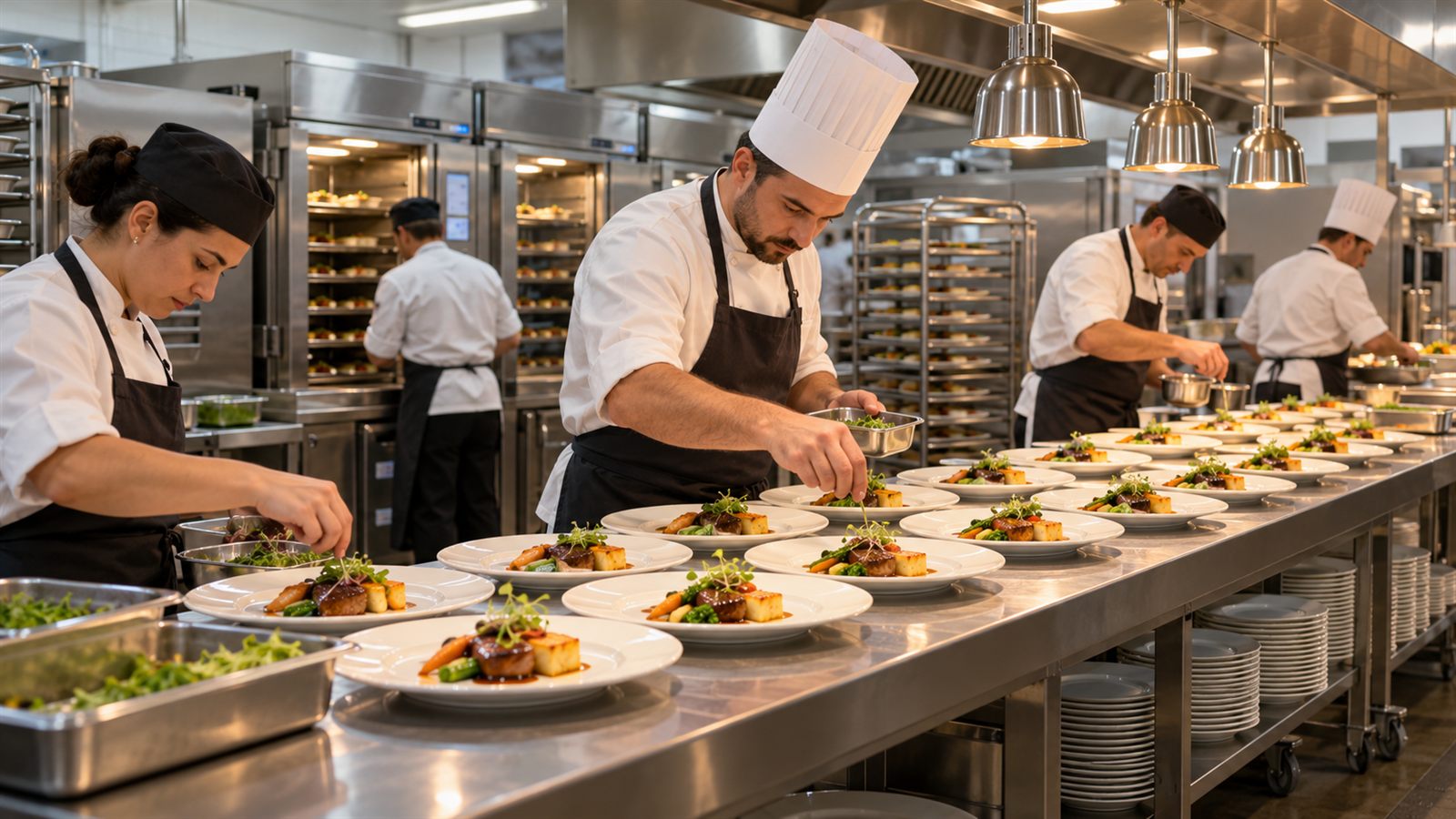
- Plated service needs a controlled assembly line, enough pass space, hot and cold component holding, plate storage and rapid dispatch.
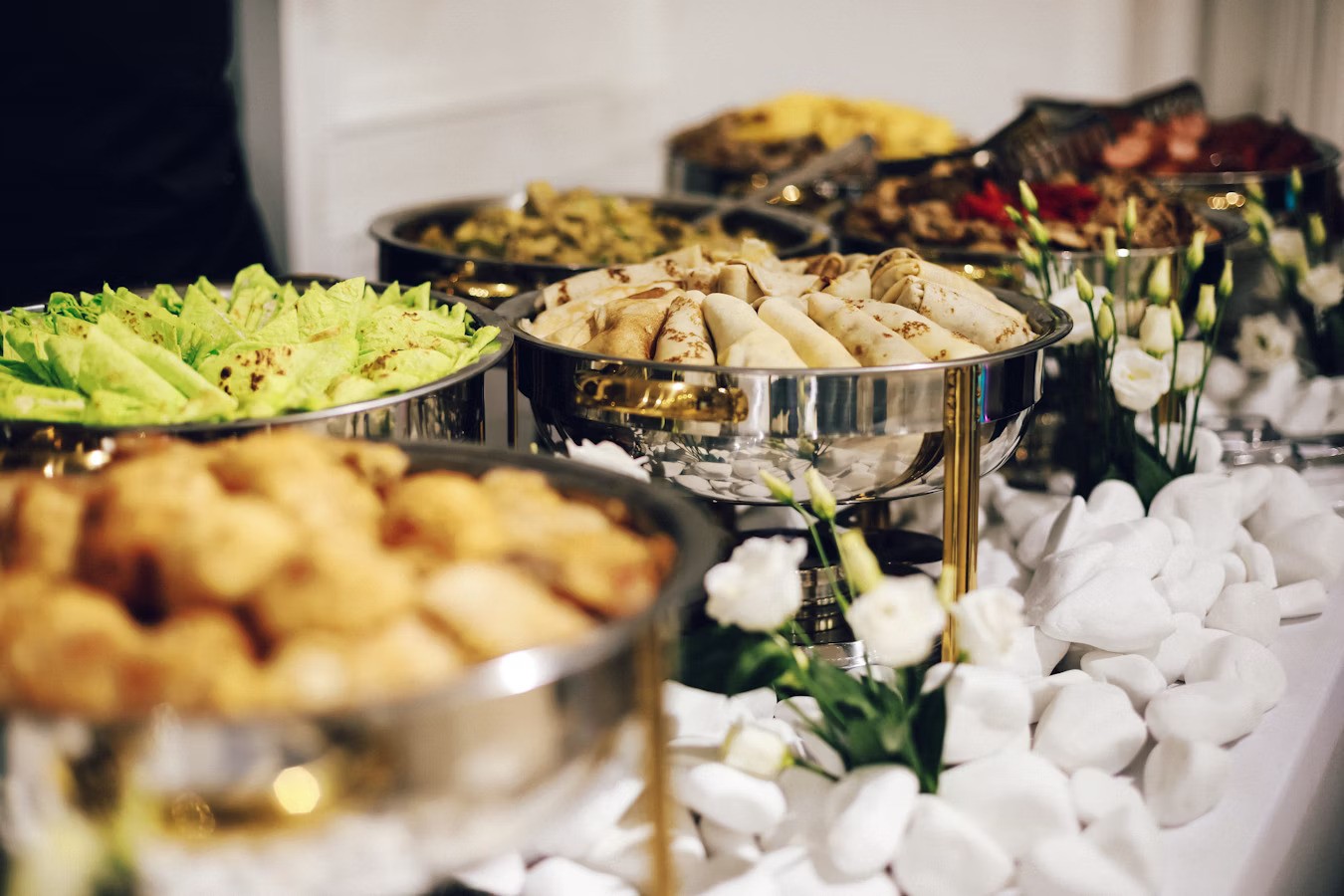
- Buffet service depends on batch production, replenishment, suitable display equipment and a clear route between the kitchen and buffet.
- Family-style service requires larger serving dishes, staging space and a plan for moving several dishes to each table together.
- Canapés and receptions create repeated smaller waves, often with intensive finishing and garnishing close to service.
- Mixed formats, such as canapés followed by a plated meal and late-night food, place different demands on the same kitchen during one function.
Record the menu, number of guests, service style, dietary variations and required dispatch time in the project brief. Our guide to preparing a better kitchen brief explains what information helps turn an initial idea into a more useful equipment discussion.
Plan for the peak, not the daily average
A restaurant can often spread orders across an evening. A banquet kitchen may have to produce almost every main course at once. The equipment must therefore be assessed against the busiest part of the function, not the quieter preparation period.
Write a simple service timeline and mark the points at which each process reaches its peak. For example:
- Cold preparation and dessert assembly during the morning.
- Bulk cooking and chilling or holding during the afternoon.
- Starter plating shortly before guests are seated.
- Main-course finishing and plate assembly during the main dispatch window.
- Crockery returns arriving in a heavy wave after each course.
- Late food, staff meals and kitchen reset continuing after the principal service.
This exercise often reveals that the apparent bottleneck is not the cooking line. It may be trolley capacity, refrigerator access, plate storage, pass length, lift availability or the route back to the dishwashing area.
The principle is similar to a busy hotel breakfast, but the timing and presentation demands are different. Our article on building a hotel breakfast kitchen for the morning rush shows how concentrated demand changes the capacity calculation.
Work backwards from the promised service time.
Start with the time the first and last tables should receive each course. Then calculate how many plates must leave the pass per minute.
If 240 main courses need to be dispatched in 30 minutes, the kitchen must average eight completed plates per minute. That figure gives the team something concrete to test. Can the cooks finish components at that rate? Can the plating line assemble them without crossing paths? Can waiting staff collect and carry them without blocking the pass?
A realistic trial should include dietary meals, last-minute table changes and the time taken to exchange full and empty trolleys. These details are small on a spreadsheet but significant during service.
Match cooking capacity to the batch plan.
Large nominal capacity is only useful when it matches the menu and the batch sequence. Consider what must be roasted, steamed, regenerated, fried or finished at the same time. Two dishes that both need the same oven mode in the same 20-minute window can create a conflict even when the total stated capacity looks sufficient.
Combi ovens can support repeatable batch cooking and regeneration, but the model, tray format and programme must suit the food being produced. The guide to choosing the right combi oven sets out the main questions to ask before specifying one.
Build the production plan around actual tray loads and cycle times. Include loading, unloading, resting and cleaning time, rather than treating each oven cycle as an uninterrupted block. Where several functions may overlap, test the plan against the larger or more complex menu, not only the simplest one.
Separate production, holding, plating and dispatch
Banquet kitchens work better when each stage has a clear place. A practical flow might run from cooking to controlled holding, then to plate assembly, checking, trolley loading and dispatch. Used trays, utensils and returned crockery should not travel back through this outward route.
The plating area needs more than a long table. It may require:
- space for clean plates and specialist dietary plates;
- hot and cold component access without staff repeatedly crossing the line;
- heat lamps or other appropriate support where the menu and procedures call for them;
- a clear final check before plates are released;
- parking space for clean and loaded trolleys;
- room for waiting staff to collect without entering the production line.
Do not let temporary banquet tables hide a permanent circulation problem. Mark the full working footprint on the floor and walk the route with the equipment, trolleys and staff positions represented at their real size.
Holding is part of the production system.
Holding equipment should preserve food safely and consistently while giving the kitchen control over dispatch. It should not be treated as extra storage for anything that happens to be ready early.
Map which elements will be held hot, chilled or at ambient temperature, how long they will wait, and how they will be monitored under the venue’s food-safety procedures. Equipment should be preheated or prepared as required by the manufacturer, and the food-safety plan should be reviewed whenever a new holding step or service method is introduced.
Quality matters alongside compliance. Some foods tolerate a short controlled hold; others are best finished in smaller batches. The menu, equipment and service sequence must be designed together.
Give refrigeration a role, not just a volume.
Banqueting can place heavy pressure on cold storage before the guests arrive. Prepared ingredients, plated desserts, garnishes, beverages and function-specific stock may all need space at the same time.
One large cold room does not automatically solve the problem. Staff may still waste time travelling between sections or searching through mixed stock. A combination of bulk storage and correctly positioned reach-in or undercounter refrigeration can shorten movement during the final preparation period.
Think about what needs to be close to pastry, garde manger, the cooking line and the plating area. The article What Goes Where? Choosing the Right Refrigeration explains why location and use are as important as stated capacity.
Plan the crockery return before the first plate leaves.
Every dispatched course creates a return wave. Hundreds of plates, glasses, cutlery items and serving pieces can arrive almost together, often while the next course is being prepared.
The return point needs space to scrape and sort, a clear distinction between clean and dirty routes, enough machine throughput, and somewhere for clean items to drain, cool and return to service. The machine cannot be judged on rack speed alone. Staff handling, pre-rinse capacity, table space and trolley movement determine whether the full system keeps up.
Our guide to planning a dishwashing area that does not interrupt service looks at these flows in more detail.
Decide whether satellite service points are needed.
A ballroom or event space may be a considerable distance from the main kitchen, particularly in a hotel with several function areas. Corridors, lifts, door widths and changes in level all affect service time.
A satellite pantry or finishing point can reduce travel, but only when its purpose is clear. It might provide hot holding, chilled storage, beverage support, plate storage or a final garnishing area. It also needs the correct power, ventilation where applicable, handwashing provision, lighting, drainage and a cleaning plan.
Measure the real route from the kitchen to the table. Confirm trolley dimensions, lift capacity and the number of trips required. A well-equipped production kitchen can still miss its service target if the last 50 metres have not been planned.
Treat outside catering as a separate operating mode.
When the function is held away from the main kitchen, transport and site services become part of the equipment plan. The team must know what will be prepared at base, what will be finished on site, and how hot, chilled and frozen items will be protected and monitored during delivery.
Check available electrical loads, fuel arrangements, water, waste, ventilation, shelter, lighting and access before committing to a menu. Our guide to equipment planning for event caterers and pop-ups covers the practical issues created by temporary and mobile sites.
Build useful contingency into the plan.
Contingency does not always mean buying two of everything. It means understanding which failure would stop service and providing a credible alternative.
This might include splitting production across two ovens, keeping essential holding capacity in more than one unit, maintaining spare trolley space, or choosing modular equipment that allows part of the operation to continue while another part is serviced. Staff should also know the revised menu or service sequence that would be used if capacity were reduced.
Planned maintenance is part of this resilience. Equipment expected to carry a full wedding season should be checked before the busiest period, not after a fault appears during a function.
A pre-function equipment check
Before each large event, confirm that:
- the final guest count and dietary list match the production plan;
- oven programmes, tray loads and batch times have been tested;
- refrigerators, freezers and holding equipment are operating correctly;
- plates, racks, trolleys and serving equipment are available in the required quantities;
- the plating and dispatch areas are clear and correctly set;
- the dishwashing team knows the expected return waves;
- power, water, ventilation and access have been checked at any satellite or outside location;
- staff understand the fallback plan for critical equipment.
Design the service before choosing the equipment
The best banquet kitchen is not necessarily the one with the most equipment. It is the one in which the menu, batch plan, staff movement and service route work as a single system.
Spiteri Catering can help hotels, wedding venues and event operators assess their peak demand, kitchen flow and equipment requirements. If you are planning a new function kitchen or reviewing an existing one, speak with our team about commercial kitchen design services in Malta and Gozo.