
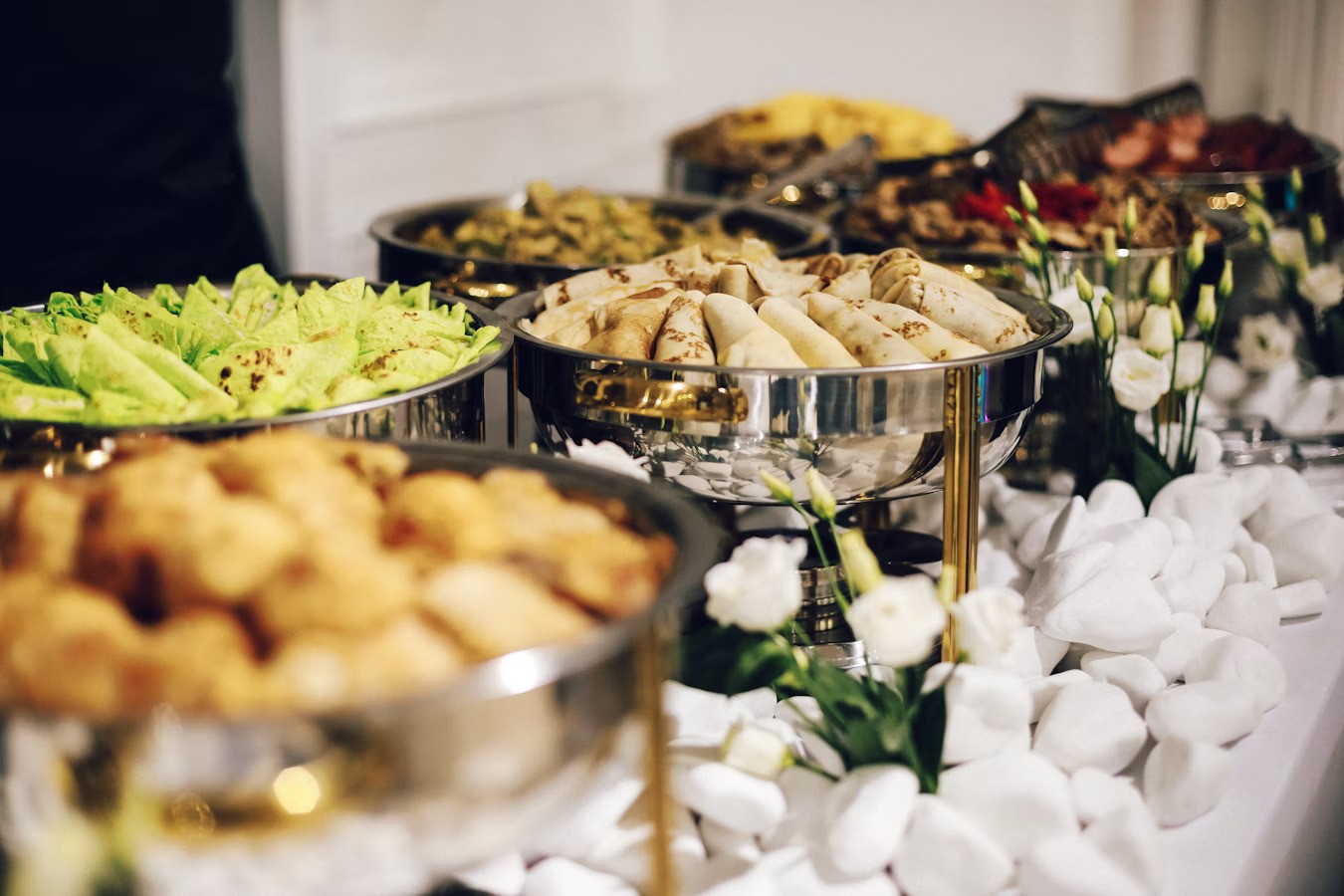
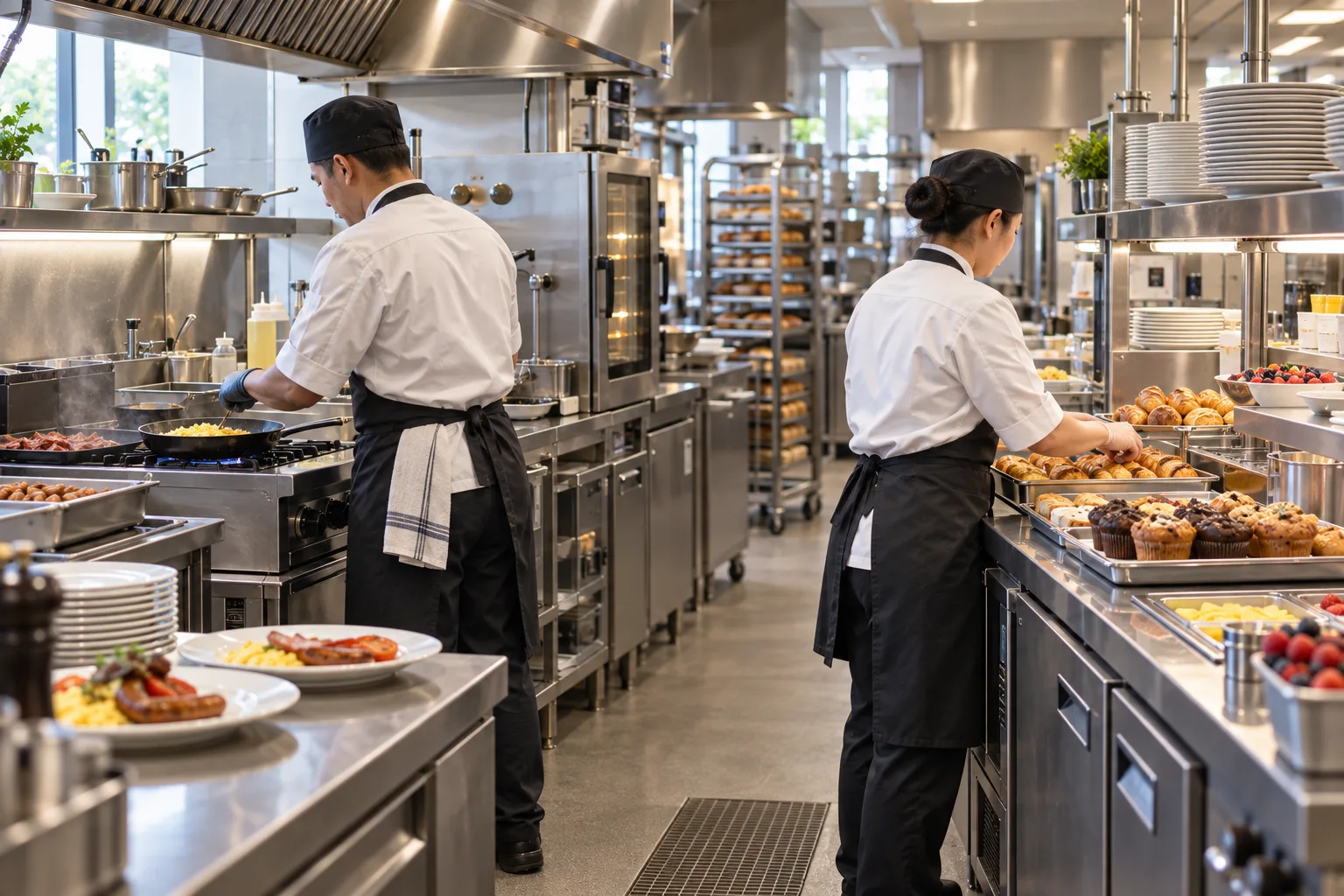
Breakfast service has a particular way of looking calm from the dining room and feeling entirely different behind the doors.
Guests arrive in waves. Eggs are expected to be ordered, pastries must look fresh, hot dishes need replenishing before the trays appear tired, coffee cannot fall behind, and used crockery returns almost as quickly as clean plates leave the kitchen. The service window may be short, but the kitchen has already been working for hours.
That concentration of demand is what makes a hotel breakfast kitchen different from a general restaurant kitchen. It is not simply a smaller version of lunch or dinner service. The menu, timing, buffet format, staffing and reset all create their own equipment and layout requirements.
A good breakfast kitchen is designed around the busiest fifteen minutes, not the average pace of the morning.
Begin with the breakfast format.
Before discussing equipment, define how breakfast will actually be served. A continental buffet, a full hot buffet, an à la carte breakfast and a mixed format place different demands on the kitchen.
A continental offer may appear straightforward, but it can involve bakery production, chilled displays, fruit preparation, cereals, dairy products, juices, coffee and a steady flow of glassware and crockery. A full buffet adds batch cooking, hot holding and faster replenishment. An à la carte element introduces tickets, individual cooking times and pressure at the pass.
Many hotels combine all three. Guests help themselves to cold items and pastries while ordering eggs, omelettes or another cooked dish. That can work very well, provided the live cooking station and the replenishment route have been planned as separate but connected workflows.
The useful questions are practical:
- Which items are prepared in advance, and which are cooked to order?
- Is the buffet replenished from the main kitchen, a satellite kitchen or directly from a service station?
- Will breakfast share equipment with room service, events or lunch preparation?
- How much of the offer changes between weekdays, weekends and peak season?
- What must be cleared, cleaned and reset before the next service begins?
Plan for guest numbers and arrival patterns.
The number of hotel rooms does not tell the whole story. Occupancy, guest profile, group bookings, departure times and the length of the breakfast window all affect demand.
Two hotels serving the same number of breakfasts can require very different kitchens. One may have guests arriving steadily over three hours. Another may receive most of its diners between 08:00 and 08:40 because coaches are leaving together. The second operation needs greater short-term cooking, holding, plate and dishwashing capacity, even if the daily cover count is identical.
Look at covers in intervals rather than as one total. Estimate the busiest fifteen and thirty minutes, then consider what happens if a group arrives early or the weather keeps guests indoors. In Malta and Gozo, seasonal occupancy can change the pace of a hotel dramatically. Equipment that is comfortable in February may be asked to work almost continuously in August.
This does not automatically mean buying the largest machine available. It means matching production capacity, recovery time and holding space to the pattern of demand. Oversized equipment can consume valuable space and utilities throughout the year. Undersized equipment creates queues exactly when the dining room is fullest.
Work backwards from the replenishment route.
A buffet is only as effective as the route used to keep it supplied. The kitchen may produce excellent food, but if staff must cross guest circulation, squeeze past the egg station or carry hot containers along a congested corridor, replenishment will be slow and uncomfortable.
Start at the buffet and trace the route back to production. Identify where empty containers return, where full replacements wait and whether the same trolley or doorway is being used in both directions. Hot, cold and bakery items may come from different sections, but their routes should meet the buffet without creating a crossing point.
Where the dining area is some distance from the main kitchen, a properly equipped satellite or finishing area may be more practical than repeated long journeys. It can hold replacement crockery, refrigerated items, hot food, beverages and basic service equipment close to the point of use. The right solution depends on the building, service format and supervision available.
Replenishment should be planned in manageable batches. Large containers may reduce the number of journeys, but food can spend longer on display, and the buffet can look less fresh towards the end of a sitting. Smaller batches increase movement but allow the team to respond more closely to actual demand. The layout and equipment need to support the balance the hotel chooses.
Give the egg station a proper production plan.
The egg station is often where breakfast service becomes visible. It is also where queues form quickly if the equipment, mise en place and handover route are not aligned.
Calculate output from likely order volume and cooking time, not simply from the number of pans that fit on the hob. The cook needs refrigerated ingredients within reach, a clear area for clean utensils, somewhere for used pans or tools, and a direct route for completed plates. If omelettes, fried eggs, pancakes and special requests all pass through one position, the station needs enough working surface to organise those tasks without mixing orders.
Extraction and heat output matter, particularly where live cooking is positioned in or near the dining room. An attractive counter is not enough if the equipment creates excessive heat, steam or odour for guests and staff. Power availability, fire protection, ventilation and safe service clearances must be assessed for the actual equipment selected and coordinated with the relevant qualified professionals.
In smaller hotels, multifunction equipment can reduce the footprint behind the scenes, but it does not remove the need to plan the live station. In larger properties, splitting egg production between a guest-facing finishing position and a back-of-house batch or preparation area can keep the theatre without asking one cook to carry the entire breakfast service.
Match bakery output to the promise being made.
Bakery requirements range from warming bought-in products to producing bread, pastries and speciality items from scratch. Those are very different operations.
Define what arrives frozen, chilled, ambient or fully prepared. Then map thawing, proving, baking, cooling, display and replenishment. An oven with suitable capacity is only one part of the process. The section also needs tray storage, landing space, ingredient storage and a route that does not interfere with hot breakfast production.
Timing is critical. Bakery work often begins before the rest of the kitchen is fully staffed. Controls and programmes should be clear for authorised users, and the cleaning routine must fit the shift. If the same oven is required for breakfast baking and later production, allow time for the changeover rather than treating both demands as if they occupy separate machines.
Separate hot production, holding and display
Cooking capacity and buffet capacity are related, but they are not the same thing. The kitchen needs to produce food at the required rate; the service area needs to hold and present it appropriately while the next batch is prepared.
Hot holding should support the service plan rather than compensate for cooking too far ahead. Consider container depth, batch size, replenishment frequency and how staff check the condition of food on display. The distance between cooking, holding and the buffet affects how much time each batch spends in transit.
Equipment placement should allow a logical sequence from raw or prepared ingredients to cooking, temporary holding and dispatch. If staff must carry finished food back through the preparation route, the plan is working against them.
Allow a clear landing point for containers returning from the buffet. They should not arrive directly onto a clean production surface or block the route used by fresh batches leaving the kitchen.
Plan cold display as part of refrigeration.
Breakfast places heavy demand on refrigerated storage and display. Dairy products, prepared fruit, cold meats, cheeses, juices and chilled garnishes may all be accessed repeatedly within a short period.
Bulk storage, preparation refrigeration and guest-facing display perform different jobs. An upright cabinet may hold reserve stock. An undercounter unit or refrigerated preparation counter keeps ingredients close to the section using them. A display unit must maintain suitable conditions while also presenting food clearly and remaining practical to replenish and clean.
In Malta's warmer months, door openings, ambient heat and loading patterns put extra pressure on refrigeration. Capacity should include the stock needed for peak occupancy without packing cabinets so tightly that airflow is compromised. Placement also matters. A well-specified unit at the wrong end of the kitchen adds hundreds of unnecessary steps across a busy week.
Leave room for delivery rhythm and growth. Hotels receiving frequent deliveries may require less reserve capacity than properties with limited storage access, but they are more dependent on reliable delivery timing. The useful figure is usable, organised capacity, not simply the volume printed on a specification sheet.
Do not let beverage service become the hidden bottleneck.
Coffee, tea, juice, water and glassware create their own workflow. Beverage demand often peaks at the same time as the egg station, and guests notice delays immediately.
Consider the number of service points, expected drinks per guest, cup and glass storage, milk refrigeration, waste, water treatment and the route for replenishing consumables. A coffee machine can produce quickly only if cups, beans, milk and clean equipment keep pace with it.
Self-service changes the staffing requirement, but it does not remove the operational work. Drip trays need attention, milk and cups need replenishing, and the surrounding area must remain orderly. Staff-operated stations need adequate working space and a layout that prevents the queue from interfering with buffet circulation.
The beverage section should also connect sensibly to washing. Sending every cup and glass across the main cooking route adds movement and increases the chance of breakage.
Design dish return and dishwashing for the clearing wave.
Breakfast dishwashing demand arrives in bursts. Cups, glasses, plates, bowls, cutlery and buffet utensils may all return together when several tables leave. If the dirty return has nowhere to absorb that wave, trolleys and racks begin occupying circulation space.
Trace the route from the dining room to sorting, scraping, washing, drying, clean storage and redistribution. Keep dirty and clean directions distinct. Provide enough landing space before and after the machine, along with the right rack types and somewhere to store them when not in use.
Machine capacity should be assessed against the busiest sustained return period, not the total number of items washed across the morning. Clean crockery must also get back to the buffet and table-setting team without crossing the incoming dirty route.
In a larger hotel, separate glasswashing or cup-washing capacity may be justified near the beverage operation. In a smaller property, one machine may handle several streams, but the sorting and timing still need to be deliberate.
Follow the whole shift, including preparation and reset.
A breakfast layout should be tested against the complete working day.
The early shift receives or retrieves ingredients, starts bakery production, prepares cold items, sets equipment and stages the buffet. During service, the priorities change to cooking, replenishment, clearing and guest requests. After service, food must be handled according to the hotel's procedures, equipment cleaned, stock checked and the kitchen handed over for the next operation.
Problems often appear at those transitions. A workbench that is adequate during service may be occupied by bakery trays during setup. The trolley route used for buffet replenishment may be blocked by lunch deliveries during reset. An oven scheduled for later production may still be completing its cleaning programme.
Walk through each phase with the staff who perform it. A floor plan can show that equipment fits. The team can explain whether the sequence works.
A practical breakfast-kitchen checklist
- Breakfast format, menu and service window are clearly defined.
- Peak covers are calculated in short intervals, not only as a daily total.
- Buffet replenishment has a direct route with space for outgoing and returning containers.
- The egg station has suitable production capacity, refrigeration, extraction and landing space.
- Bakery preparation, baking, cooling and display have been mapped as one process.
- Hot production and hot holding match the chosen batch size and replenishment rhythm.
- Bulk, preparation and display refrigeration are specified as separate requirements.
- Beverage output, milk storage, cups, glasses and cleaning can keep pace with demand.
- Dirty return, dishwashing, drying and clean redistribution are sized for the clearing wave.
- Staff and trolley routes avoid unnecessary crossings between guests, clean food and dirty ware.
- Utilities, drainage, ventilation, access and servicing clearances have been confirmed.
- The reset for lunch, events or room service has enough time and working space.
Design the morning as one operation.
A hotel breakfast kitchen works best when no section is planned in isolation. The oven affects bakery timing. The buffet affects replenishment. The beverage station affects glasswashing. The guest arrival pattern affects all of them at once.
For a small hotel, the answer may be a compact, carefully sequenced kitchen using flexible equipment. For a large property, it may involve dedicated production zones, satellite service areas and higher-capacity dishwashing. Neither is automatically better. The right kitchen is the one designed around the hotel's actual breakfast promise, building and operating pattern.
Spiteri Catering works with hotels and hospitality operators across Malta and Gozo on kitchen planning, equipment specification, installation and ongoing technical support. If you are developing a new breakfast operation or trying to remove bottlenecks from an existing one, we can assess the menu, peak demand, available space and services before recommending a practical layout and equipment plan.
Related reading: How to Plan a Commercial Kitchen in Malta | What Goes Where: Choosing the Right Refrigeration | Planning a Dishwashing Area That Does Not Interrupt Service | The Combi Oven: What It Is, What It Does and How to Choose the Right One | Good Kitchen Design and Staff Wellbeing