

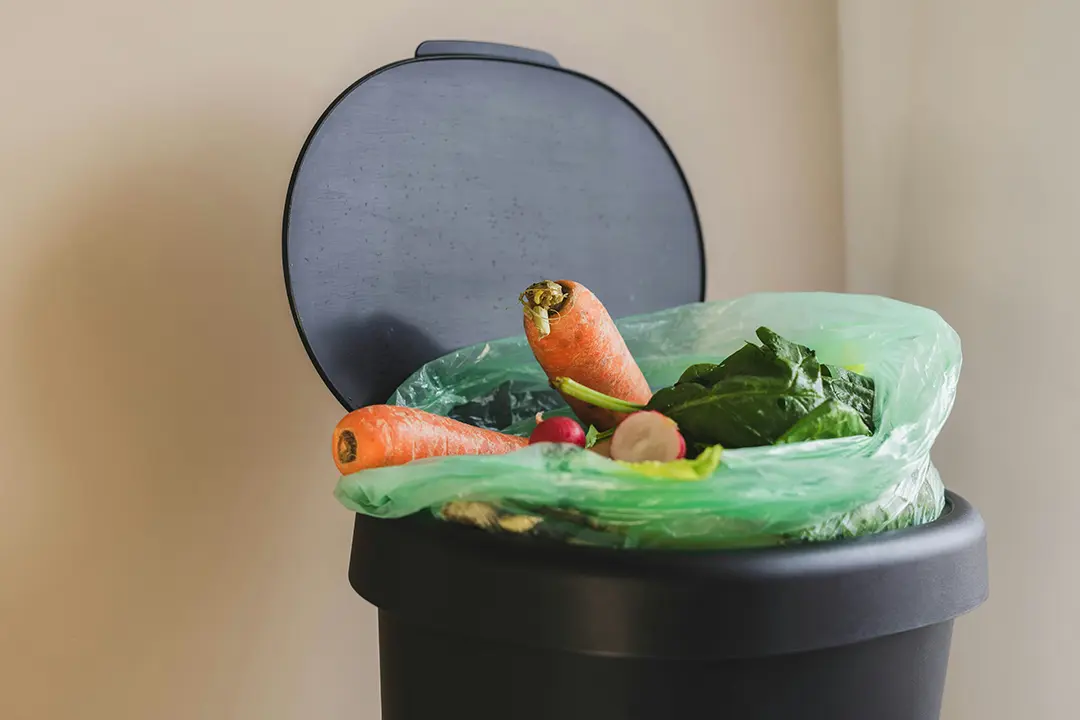
The breakfast buffet has closed, but three kilograms of sausages are still sitting in the final tray. At prep, a box of herbs has been discarded after being found at the back of the cold room. Later, several portions of the same side dish return almost untouched.
Each loss has a different cause. One came from forecasting, one from stock rotation and one may point to portion size or the way the dish is being received. If they all disappear into the same bin without being recorded, the kitchen learns nothing from them.
A kitchen waste log gives those losses a pattern. It records what was discarded, how much, where it came from and why it happened. Used consistently, it gives chefs and managers evidence for changing ordering, preparation, storage, portions and production planning.
A waste log is not a record of who made a mistake. It is a record of where the operation can make a better decision next time.
What a useful waste log needs to record
A waste log should be quick enough to complete during a working shift and detailed enough to support a decision later. At minimum, each entry should record:
- The date and time.
- The item discarded.
- The quantity and unit, such as kilograms, litres, portions or individual items.
- The waste category.
- The reason it occurred.
- An estimated cost, where this can be calculated consistently.
- The staff member's initials.
- Any immediate action taken.
Keep quantity and unit separate. An entry of “two” is not useful a week later if nobody remembers whether it meant two portions, two trays or two kilograms.
Perfect accuracy is not the objective during the first week. Consistency is. A reasonable measurement recorded every time is more useful than a precise system that staff stop using after two days.
Separate the waste category from the reason
The category describes where in the operation the waste occurred. The reason explains why it happened. Keeping those two fields separate makes the weekly review far more useful.
Preparation waste
This includes trim, peelings, damaged ingredients and mistakes made during preparation. Some preparation waste is unavoidable. Bones, shells and certain trimmings will still exist in a well-run kitchen. The useful question is whether the quantity is normal for the product and output.
Spoilage
This covers stock discarded because it expired, deteriorated or was stored incorrectly. Repeated spoilage may point to ordering quantities, labelling, stock rotation, delivery rhythm or refrigeration placement. Our guide to choosing and positioning commercial refrigeration explains why storage capacity alone does not guarantee a workable cold-storage system.
Overproduction
This is prepared food that was not required for service. It often appears in buffet operations, banqueting, batch cooking and mise en place prepared against an optimistic forecast. A hotel may discover that most breakfast waste comes from the final replenishment cycle rather than the main rush. That is a production-timing problem, not simply a food problem. The same relationship between guest arrivals, batch size and replenishment is covered in our guide to building a hotel breakfast kitchen.
Plate returns
This is food returned by guests. A repeated pattern can indicate portion size, an unpopular accompaniment, inconsistent preparation or a mismatch between the menu description and what arrives at the table. One returned portion proves very little. Twenty similar returns across a week deserve attention.
The reason field should then describe the likely cause in plain language: over-forecasting, poor rotation, over-trimming, cooking error, portion too large, damaged delivery or another explanation the team can act upon.
What one completed entry should tell you
A useful entry might look like this:
| Date and time | 14/07, 10:45 |
|---|---|
| Item | Breakfast sausages |
| Quantity | 3 kg |
| Category | Overproduction |
| Reason | Final buffet batch too large |
| Estimated cost | €18 |
| Action | Reduce the final batch and review after seven days |
That entry is useful because it identifies a testable change. “Food wasted” would not be enough. “Three kilograms of breakfast sausages left after an oversized final buffet batch” gives the chef a place to start.
Start with a seven-day baseline
Introduce the log as a short, defined exercise before treating it as a permanent process. Seven consecutive operating days usually capture enough variation to reveal the first patterns: quiet services, busy sittings, delivery days and at least one weekend.
Before the first shift:
- Choose one standard sheet or digital form.
- Agree the categories and units the kitchen will use.
- Place the log close to the waste point without obstructing work.
- Brief the team on what should be recorded.
- Assign one person per shift to check that entries are complete.
- Set a date for the first review before tracking begins.
A clipboard beside the appropriate station may work better than a tablet in a busy kitchen. A spreadsheet may suit a multi-site operation that wants to combine results. The best format is the one the team will complete reliably.
Make logging part of the shift
Do not rely on staff remembering every discarded item at the end of service. Entries should be made when waste occurs or at a defined checkpoint shortly afterwards.
Useful checkpoints include the end of preparation, the end of each service period and the close-down of refrigeration or buffet sections. The shift lead should check the sheet before handover, clarify unreadable entries and make sure unusually large losses have an explanation.
Keep the process brief. Item, quantity, category, reason and initials should normally take less than a minute. Estimated cost can be added by a manager later if asking service staff to calculate it would slow completion.
How to estimate the cost without inventing precision
The purpose of the cost field is to show scale and priority, not to produce a perfect accounting record.
For a raw ingredient, use the purchase cost per kilogram, litre or unit and multiply it by the quantity discarded. If chicken costs €6 per kilogram and 2 kg is wasted, the estimated ingredient cost is €12.
For a prepared dish, use a consistent ingredient-cost estimate per portion. Do not include labour, energy and lost selling price unless the business already has a reliable method for doing so. Mixing different cost methods makes week-to-week comparisons misleading.
If cost information is not readily available, record quantity first. A kitchen can still act on repeated kilograms, portions or trays of waste while the cost data is being prepared.
Review the log every week
The log becomes valuable during the review, not while it is sitting on the clipboard.
At the end of the week, identify:
- Total quantity and estimated cost.
- The most frequently wasted item.
- The category producing the largest avoidable loss.
- The shift, section or service period where the pattern appears.
- Whether the issue is repeated or exceptional.
- One corrective action to test.
- The person responsible and the date the result will be reviewed.
A practical review does not attempt to fix everything at once. If spoilage, plate returns and overproduction all appear, start with the most valuable repeated loss. Make one clear change, measure the following week and compare the result.
Turn patterns into operational changes
Different patterns require different responses.
If spoilage is highest
Review order quantities, delivery frequency, date labelling, first-in-first-out rotation and the position of stock in refrigeration. Check whether staff can see and reach the items that need to be used first.
If preparation waste is highest
Compare yield between shifts, review knife and preparation methods, and check whether specifications are creating unnecessary trim. Training may help, but the issue may also be the product being purchased or the equipment being used.
If overproduction is highest
Compare forecast covers with actual covers, then look at batch sizes and the timing of the final production cycle. Suitable surplus should only be stored or reused where the kitchen's food-safety procedures allow it. Vacuum packing may support portioning and appropriate end-of-service storage, but it should follow a defined process rather than becoming a reason to keep everything. Our article on planning a professional vacuum-packing station explains where that equipment fits within a working kitchen.
If plate returns are highest
Compare the dishes, sides and portion sizes involved. Speak to front-of-house staff, who may already know what guests are leaving and why. A smaller portion with the option of an additional side can sometimes serve the guest better than a plate that looks generous but repeatedly returns unfinished.
Use the log to improve systems, not assign blame
Staff will not record waste honestly if every entry is treated as an individual failure. The purpose is to improve the system around ordering, preparation and service.
Names or initials provide traceability when an entry needs clarification. They should not turn the sheet into a scorecard. Managers should discuss patterns with the whole team, recognise useful observations and explain what changed because the information was recorded.
This creates a useful loop: staff log what they see, managers respond, and the team understands that completing the sheet leads to practical decisions rather than paperwork for its own sake.
Equipment should follow the evidence
A waste log may reveal that equipment is contributing to the problem, but it should not begin with an equipment assumption.
Repeated spoilage may justify reviewing refrigeration capacity, placement or condition. Inconsistent portions may point to scales, scoops or portioning tools. Suitable surplus production may benefit from vacuum packing, blast chilling or more appropriate storage containers. High preparation loss may indicate that the current food-preparation method is placing too much manual work on the team.
The log gives a supplier a better brief. Instead of saying “we need more refrigeration”, an operator can explain which products are being lost, how often, in what quantity and under which service conditions. That leads to a more useful equipment conversation.
Download the kitchen waste log
Spiteri Catering has prepared a printable kitchen waste log to help professional kitchens begin tracking immediately.
Download the Kitchen Waste Log PDF
Print the sheet, brief the team and use it for seven consecutive operating days. At the end of the week, identify the largest repeated loss and agree one action to test.
Frequently asked questions
Who should complete a kitchen waste log?
The person handling or disposing of the item should record the basic entry. A shift lead should check completion, and a chef, kitchen manager or appropriate supervisor should carry out the weekly review.
Does every item need to be weighed?
No. Use the most practical consistent unit. Kilograms and litres suit bulk ingredients, while portions, trays or individual items may suit service waste. Weighing is valuable when practical, but consistency matters more than slowing the operation for perfect measurement.
Should unavoidable preparation waste be recorded?
Record it separately if it is useful to the operation. This prevents normal bones, shells or peelings from hiding avoidable spoilage and overproduction. It can also help when assessing disposal arrangements.
How often should the results be reviewed?
Weekly review is a sensible starting point. High-volume sections may benefit from a short daily check as well, particularly when an action is being tested.
Should we use paper or a spreadsheet?
Use whichever format staff will complete consistently. Paper is immediate and visible. A spreadsheet makes totals and comparisons easier. Some operations use paper during service and transfer the weekly totals into a spreadsheet.
Measure first, then change the operation
Food waste rarely has one cause. It sits across purchasing, storage, preparation, service and guest behaviour. A waste log makes those causes visible enough to separate.
Start with one week, use consistent categories and review the result with the people doing the work. The objective is not to produce a perfect report. It is to identify one repeated loss, make one practical change and measure whether it worked.
For a wider look at storage, preparation, menu planning and other ways professional kitchens can reduce loss, read Beyond the Bin: Strategies for Reducing Food Waste.
If the results point to a problem with storage, preparation equipment or kitchen workflow, contact the Spiteri Catering team. We can help assess the operational requirement before recommending equipment or layout changes.
Related reading: Beyond the Bin | What Goes Where: Choosing the Right Refrigeration | The Fifth Station: Henkelman Vacuum Machines in Malta | Building a Hotel Breakfast Kitchen